

AI Summary of Peer-Reviewed Research
This page presents an AI-generated summary of a published research paper. The original authors did not write or review this article. See full disclosure ↓
⚠️ This article summarizes published research and is intended for informational purposes only. It does not constitute medical advice or clinical guidance.
Publication Signals show what we were able to verify about where this research was published.STRONGWe verified multiple publication signals for this source, including independently confirmed credentials. Publication Signals reflect the source’s verifiable credentials, not the quality of the research.
- ✔ Peer-reviewed source
- ✔ Published in indexed journal
- ✔ No retraction or integrity flags
Overview
This research examines cognitive fragmentation in Good Manufacturing Practice (GMP) implementation within healthcare organizations through a mathematical framework integrating knowledge-driven performance assessment. The study addresses intelligence distribution and motivational dynamics among personnel operating in sterile manufacturing environments, conceptualizing GMP learning and execution as drivers of organizational intelligence patterns. The work applies finite element and difference equation methodologies to model the relationship between structured GMP training protocols and cognitive-operational performance across distributed personnel and systems.
Methods and approach
The study employs a three-dimensional lattice framework incorporating input knowledge, standard operating procedures, and GMP training variables within a manufacturing context. The analytical approach integrates four intelligence dimensions—operational, leadership, documentation, and risk-taking—using Galerkin equations to model complete coordination. Newton forward difference equations were solved via numerical methods and computational programming to estimate intelligence contribution patterns across sterile manufacturing regions. Validation involved testing against empirical data from a GMP-compliant contraceptive pilot plant and two industrial laboratory facilities.
Key Findings
Analysis demonstrates that intelligence contribution varies spatially across the sterile manufacturing region and that learning motivation influences intelligence distribution patterns. Computational modeling shows differential intelligence expression among personnel, environmental factors, and processes. Experimental validation using the pilot plant and industrial laboratories confirmed the analytical predictions, indicating that proper GMP execution activates personnel intelligence while revealing heterogeneous intelligence distribution across individuals, cognitive systems, work environments, and operational processes.
Implications
The research provides a quantitative framework for addressing cognitive fragmentation arising from interdisciplinary healthcare manufacturing operations. By characterizing intelligence distribution as a function of GMP training implementation and learning dynamics, the study establishes methodology for identifying and mitigating performance degradation caused by uncoordinated cognitive contributions. Results suggest that targeted knowledge-driven training protocols can optimize intelligence alignment across distributed personnel and systems.
Organizations implementing GMP standards can utilize this framework to diagnose intelligence distribution inefficiencies and design training interventions that enhance cognitive coordination. The mathematical model enables prediction of performance variation based on training intensity and motivational variables, supporting evidence-based resource allocation. Findings extend understanding of knowledge-driven organizational effectiveness by quantifying the relationship between systematic GMP practices and distributed cognitive performance.
Disclosure
- Research title: Cognitive break up in operational practice of good manufacturing system: knowledge-driven performance appraisal outlook
- Authors: Pradeep K. Jha, Suvadip Ghorai, Rakhi K. Jha, Surya Prakash Singh
- Publication date: 2026-02-23
- DOI: https://doi.org/10.1108/bij-09-2024-0817
- OpenAlex record: View
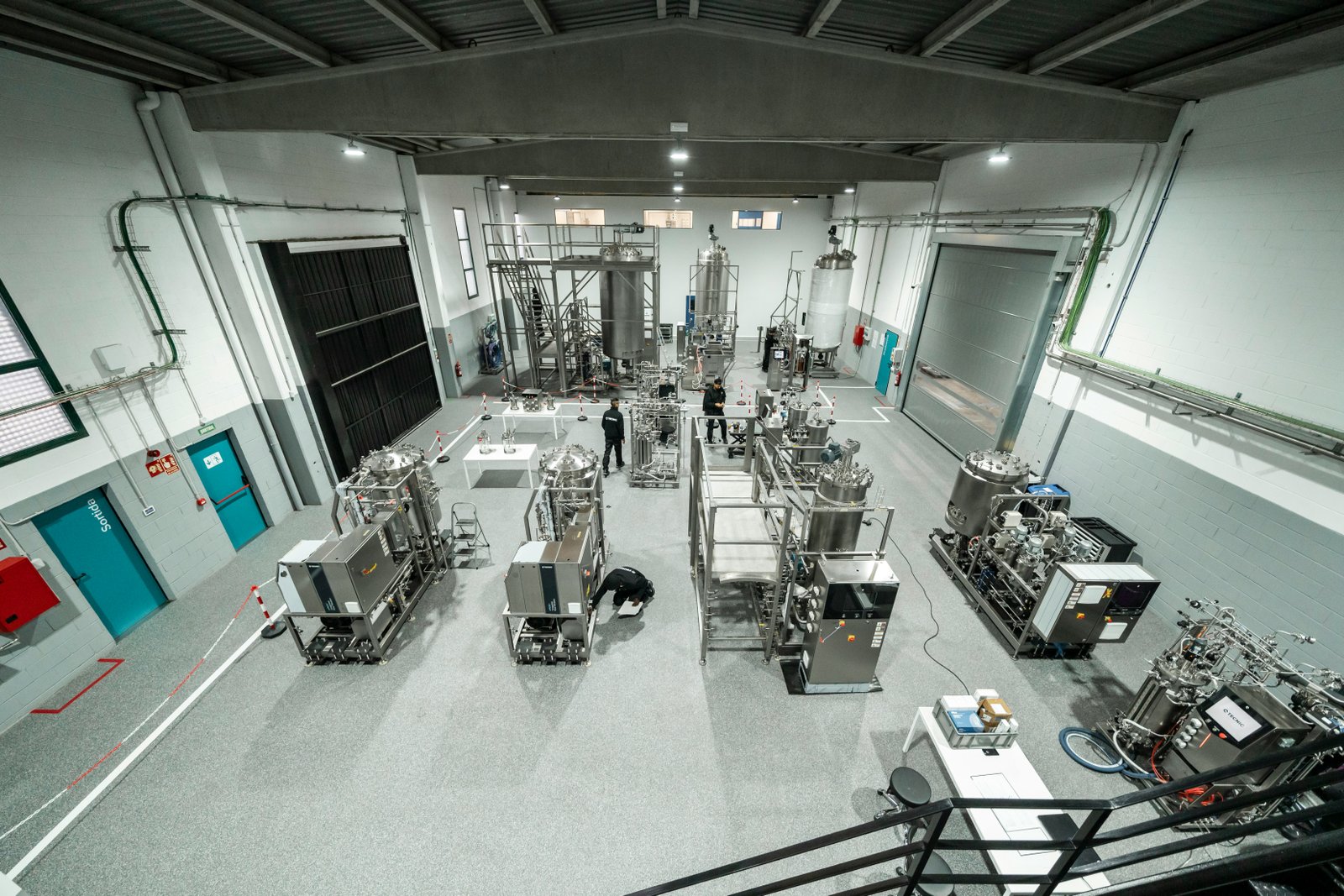
- Image credit: Photo by TECNIC Bioprocess Solutions on Unsplash (Source • License)
- Disclosure: This post was generated by Claude (Anthropic). The original authors did not write or review this post.
Get the weekly research newsletter
Stay current with peer-reviewed research without reading academic papers — one filtered digest, every Friday.