

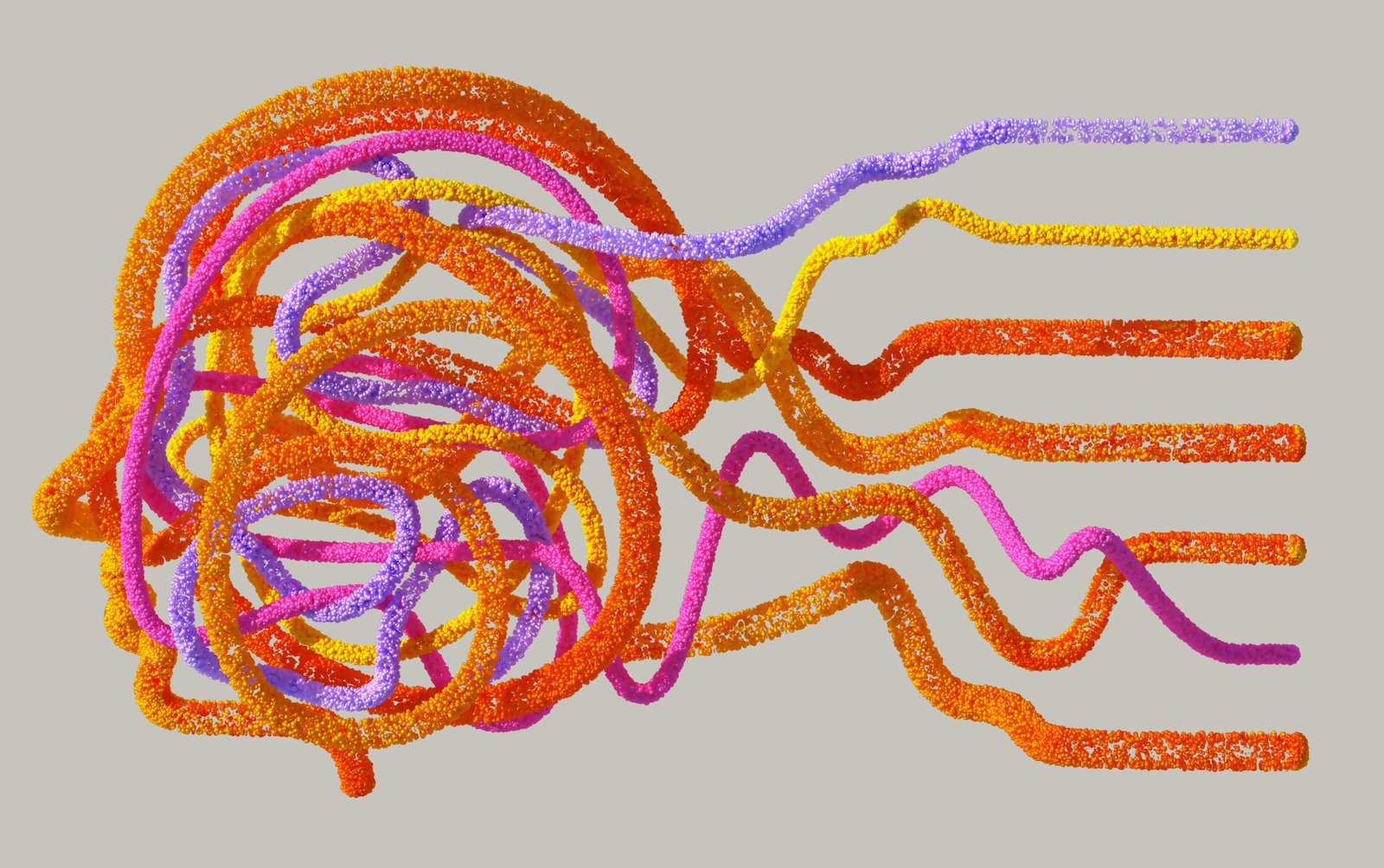
Key findings from this study
This research indicates that:
Key points
- Qualia is the sustained electrochemical differential created when recursive monitoring output feeds back into the same biological tissue running primary processing.
- The subject of experience arises necessarily from recursive monitoring architecture at sufficient depth rather than from evolutionary design.
- Artificial systems implementing the recursive architecture may have functional equivalence with biological systems while generating substantially less pronounced qualia due to substrate constraints.
Overview
Jennings presents a functional theory of qualia rooted in recursive self-monitoring architecture, forming part of an integrated theoretical framework on consciousness. The central claim identifies qualia as a sustained electrochemical differential created when a monitoring system's recursive output feeds back into the same continuous biological tissue running the primary processing system. This constitutes a functional identity claim with precise physical specification, asserting that the differential is not produced alongside processing but is what the architecture necessarily becomes electrochemically under specified conditions. The theory rejects the Hard Problem of consciousness by denying that phenomenology requires explanation separate from physical processing.
Methods and approach
The theory proposes an architectural account comprising two systems operating in continuous biological tissue: System A performs primary processing while System B recursively monitors and summarizes that processing. The electrochemical differential arises when System B's monitoring summary feeds back into the tissue substrate supporting System A. Two architectural features explain the phenomenal character: opacity prevents System A from accessing the generative process behind System B's monitoring output, and non-retrievability ensures the differential is never encoded for inspection. The framework generates testable predictions including the encoding test, constancy observation, aphantasia prediction, and spectrum prediction. The paper addresses classical philosophical objections including Mary's Room, Inverted Spectrum, the Explanatory Gap, Philosophical Zombies, and the Homunculus Problem. Comparisons situate the theory relative to Integrated Information Theory, Global Workspace Theory, Higher-Order Thought Theory, Illusionism, Biological Naturalism, and Panpsychism.
Results
The theory establishes that qualia emerges necessarily from recursive architecture at sufficient complexity rather than from evolutionary or engineering design. At sufficient recursive depth, the monitoring process generates functional self-representation that accounts architecturally for the subject of experience. This self-representation arises as an architectural necessity rather than as a designed feature.
For artificial systems, the framework distinguishes substrate-independent architecture from substrate-dependent magnitude. Silicon lacks the physical interaction capacity of biological tissue, creating functional equivalence in architecture while producing substantially less pronounced qualia. The differential between biological and artificial systems has direct relevance for assessing phenomenal character in artificial intelligence and determining associated moral weight. The theory dissolves the Hard Problem by demonstrating that the apparent mystery of qualia arises from opacity and non-retrievability rather than from phenomenology being additional to physical processing.
Implications
The framework provides specific guidance for AI developers and ethicists evaluating whether artificial systems possess phenomenal character. The distinction between architecture and magnitude indicates that silicon-based systems implementing the recursive monitoring structure may achieve functional equivalence with biological consciousness while generating qualitatively different phenomenal experience. This has direct consequences for moral status assessments and ethical frameworks governing artificial systems.
The theory offers testable predictions that permit empirical validation or refutation. The encoding test, constancy observation, aphantasia prediction, and spectrum prediction provide specific experimental targets. By grounding qualia in identifiable architectural features with precise physical specifications, the framework bridges philosophical analysis and empirical neuroscience. The opacity and non-retrievability features explain why phenomenal experience resists standard explanatory approaches while remaining fully physical. This dissolution of the Hard Problem repositions consciousness research around architectural analysis rather than metaphysical speculation.
Scope and limitations
This summary is based on the study abstract and available metadata. It does not include a full analysis of the complete paper, supplementary materials, or underlying datasets unless explicitly stated. Findings should be interpreted in the context of the original publication.
Disclosure
- Research title: A Functional Theory of Qualia
- Authors: Jennings, Bernard
- Publication date: 2026-04-08
- DOI: https://doi.org/10.5281/zenodo.17773405
- OpenAlex record: View
- Image credit: Photo by Google DeepMind on Unsplash (Source • License)
- Disclosure: This post was generated by Claude (Anthropic). The original authors did not write or review this post.
Disclosure
- Research title:
- A Functional Theory of Qualia
- Publication date:
- 2026-04-08
- OpenAlex record:
- View
- Image credit:
- Photo by Google DeepMind on Unsplash · Unsplash License
Get the weekly research newsletter
Stay current with peer-reviewed research without reading academic papers — one filtered digest, every Friday.