
AI Summary of Peer-Reviewed Research
This page presents an AI-generated summary of a published research paper. The original authors did not write or review this article. See full disclosure ↓
Publication Signals show what we were able to verify about where this research was published.STRONGWe verified multiple publication signals for this source, including independently confirmed credentials. Publication Signals reflect the source’s verifiable credentials, not the quality of the research.
- ✔ Peer-reviewed source
- ✔ Published in indexed journal
- ✔ No retraction or integrity flags
Key findings from this study
This research indicates that:
- Multiple phases of artistic creation and reuse occurred within the studied topographic area across distinct Palaeolithic intervals.
- Human transit through the decorated space occurred independent of artistic production, as evidenced by archaeological deposits lacking contemporaneous imagery.
- AMS dating integrated with stratigraphic analysis permits differentiation between primary artistic execution, secondary artistic modification, and non-artistic occupation of decorated cave zones.
Overview
This study integrates accelerator mass spectrometry (AMS) dating of archaeological deposits with stratigraphic analysis and formal assessment of rock art imagery from a discrete topographic zone in Altamira Cave. The combined approach establishes chronological and behavioral sequences for human interactions with the decorated surfaces spanning the Palaeolithic period.
Methods and approach
The investigation examined rock art within a defined topographic area of the cave. AMS dating of spatially associated archaeological materials provided absolute chronological anchors. Superposition analysis documented stratigraphic relationships. Formal characteristics of the imagery informed comparative assessment. Integration of these datasets permitted reconstruction of creation, use, and transit patterns across the decorated zone.
Results
The study delineates multiple temporal horizons of human activity within the cave art area. Radiocarbon results from associated deposits establish chronological constraints on artistic production and subsequent occupation patterns. Superposition evidence and stylistic analysis of the imagery reveal sequences of artistic creation and reuse across different Palaeolithic occupations. The data permit differentiation between initial artistic execution, revisitation and modification of existing representations, and secondary use of the space through transit without artistic engagement. This chronological framework contextualizes the rock art within broader patterns of human use and occupation within this cave sector.
Implications
The research demonstrates that cave decoration at Altamira resulted from episodic human visitation rather than singular occupational events. Understanding chronological sequences of artistic activity and spatial reuse illuminates broader questions about the significance of decorated caves in Palaeolithic settlement systems and mobility patterns. The biographical approach to the decorated zone establishes methodological precedent for examining temporal depth in rock art assemblages.
Scope and limitations
This summary is based on the study abstract and available metadata. It does not include a full analysis of the complete paper, supplementary materials, or underlying datasets unless explicitly stated. Findings should be interpreted in the context of the original publication.
Disclosure
- Research title: Times of Execution, Transit and Use of the Palaeolithic Rock Art of the Cave of Altamira (Cantabria, Spain): A Case Study
- Authors: Álvaro Ibero, Marcos García-Diez, Blanca Ochoa Fraile, Alfredo Prada Freixedo, Lucía M. Díaz-González, Carmen de las Heras Martín, Déborah Ordás Pastrana, Paula López Calle, M. Elena Sánchez-Moral, Eudald Carbonell, Pilar Fatás Monforte
- Institutions: Cervantes Institute, Institut Català de Paleoecologia Humana i Evolució Social, Tre Altamira (Spain), Universidad Complutense de Madrid
- Publication date: 2026-04-06
- DOI: https://doi.org/10.1017/s0959774326100511
- OpenAlex record: View
- PDF: Download
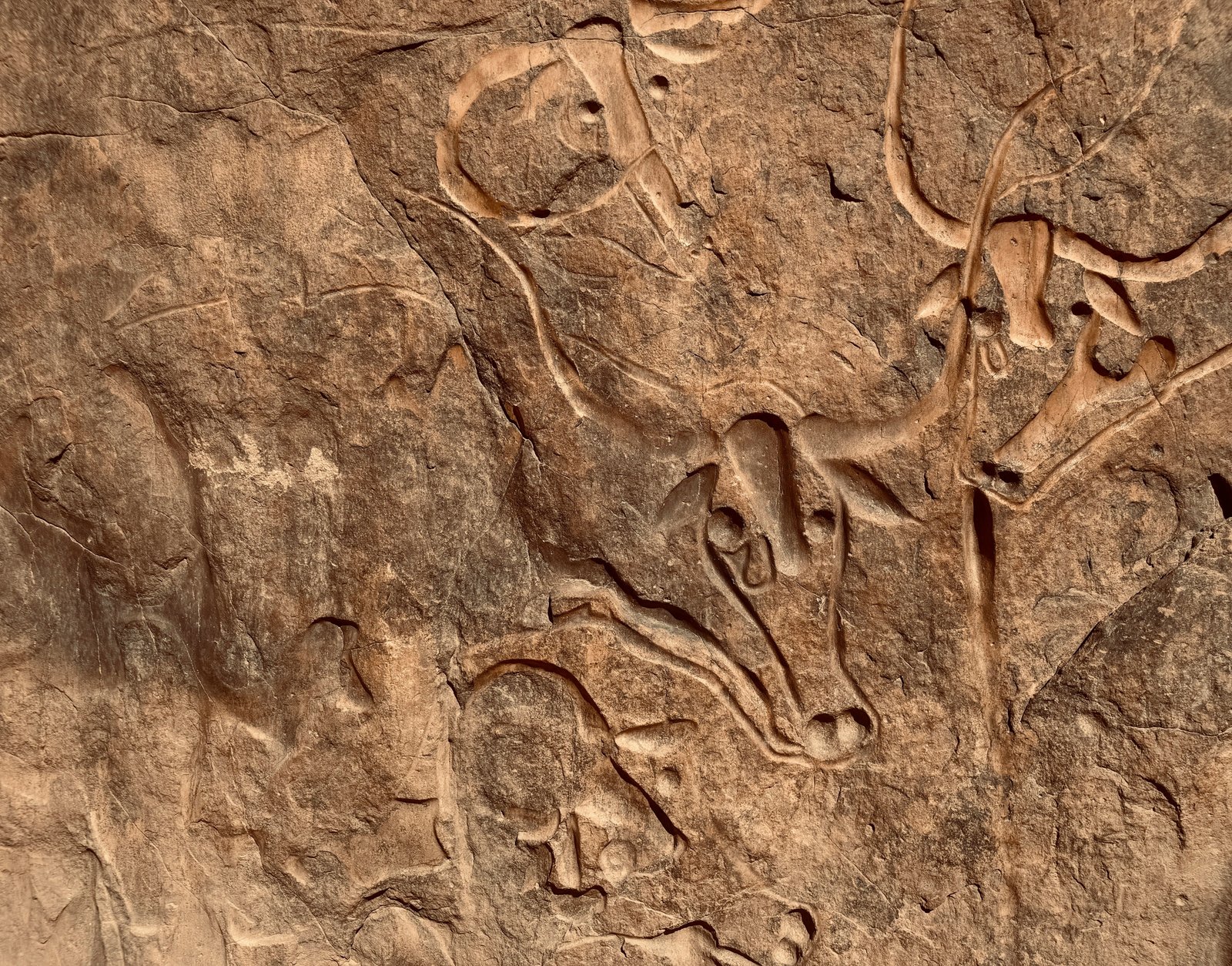
- Image credit: Photo by Azzedine Rouichi on Unsplash (Source • License)
- Disclosure: This post was generated by Claude (Anthropic). The original authors did not write or review this post.
Get the weekly research newsletter
Stay current with peer-reviewed research without reading academic papers — one filtered digest, every Friday.


