

What the study found
The study found that self-reported trauma was associated with more complex and disturbed Rorschach content, a performance-based personality assessment. It also found that both self-report and Rorschach measures were linked to avoiding emotionally charged stimuli in an eye-tracking task.
Why the authors say this matters
The authors conclude that self-reported trauma may be reflected in behavioral patterns captured by performance-based and eye-tracking measures. They suggest this offers insight into trauma-related attention and response tendencies.
What the researchers tested
Ninety-three Italian volunteers completed the International Trauma Exposure Measure (ITEM), the Rorschach Performance Assessment System (R-PAS), and a free-viewing eye-tracking task. The task compared responses to neutral and negative stimuli, and the researchers examined correlations among ITEM scores, selected R-PAS variables, and dwell time as an attentional bias index.
What worked and what didn't
Self-reported trauma was associated with more complex and disturbed Rorschach content. More importantly, both self-report and Rorschach data correlated with a tendency to avoid emotionally charged stimuli in the eye-tracking task.
What to keep in mind
The abstract does not describe specific limitations. The findings come from 93 Italian volunteers, so the summary only supports that sample and those measures.
Key points
- Self-reported trauma was linked to more complex and disturbed Rorschach content.
- Self-report and Rorschach data were both correlated with avoiding emotionally charged stimuli in eye tracking.
- The study used the International Trauma Exposure Measure, R-PAS, and a free-viewing eye-tracking task.
- The eye-tracking task contrasted neutral and negative stimuli.
- The abstract describes the results as reflecting trauma-related attention and response tendencies.
Disclosure
- Research title:
- Trauma was linked to Rorschach differences and eye-tracking avoidance
- Authors:
- Alessandro Lorenzoni, Francesca Ales, Alessandro Zennaro, Luciano Giromini
- Institutions:
- University of Turin, University of Turin, University of Turin, University of Turin
- Publication date:
- 2026-03-30
- OpenAlex record:
- View
- Image credit:
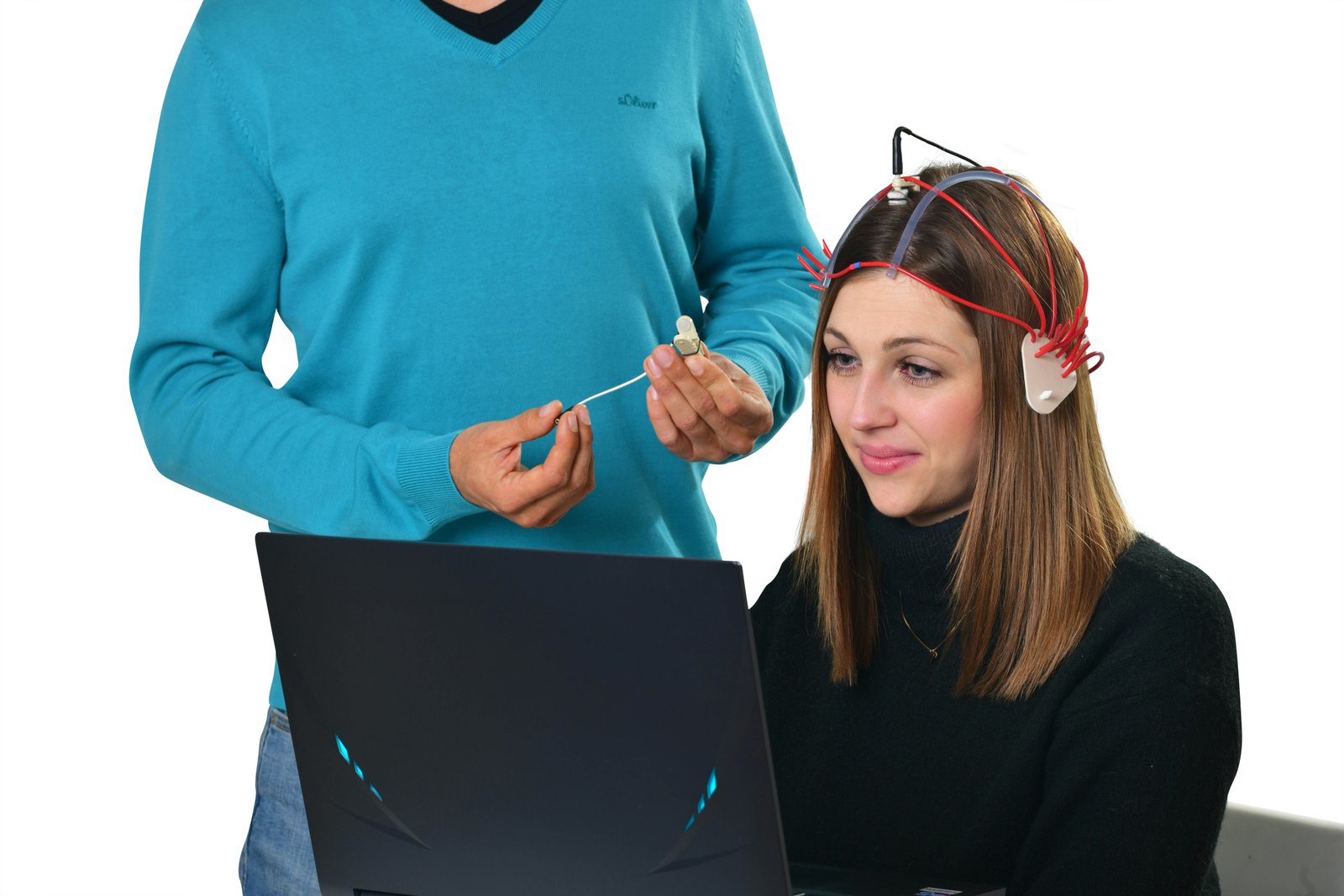
- Photo by Mindfield Biosystems on Unsplash · Unsplash License
Get the weekly research newsletter
Stay current with peer-reviewed research without reading academic papers — one filtered digest, every Friday.