

What the study found
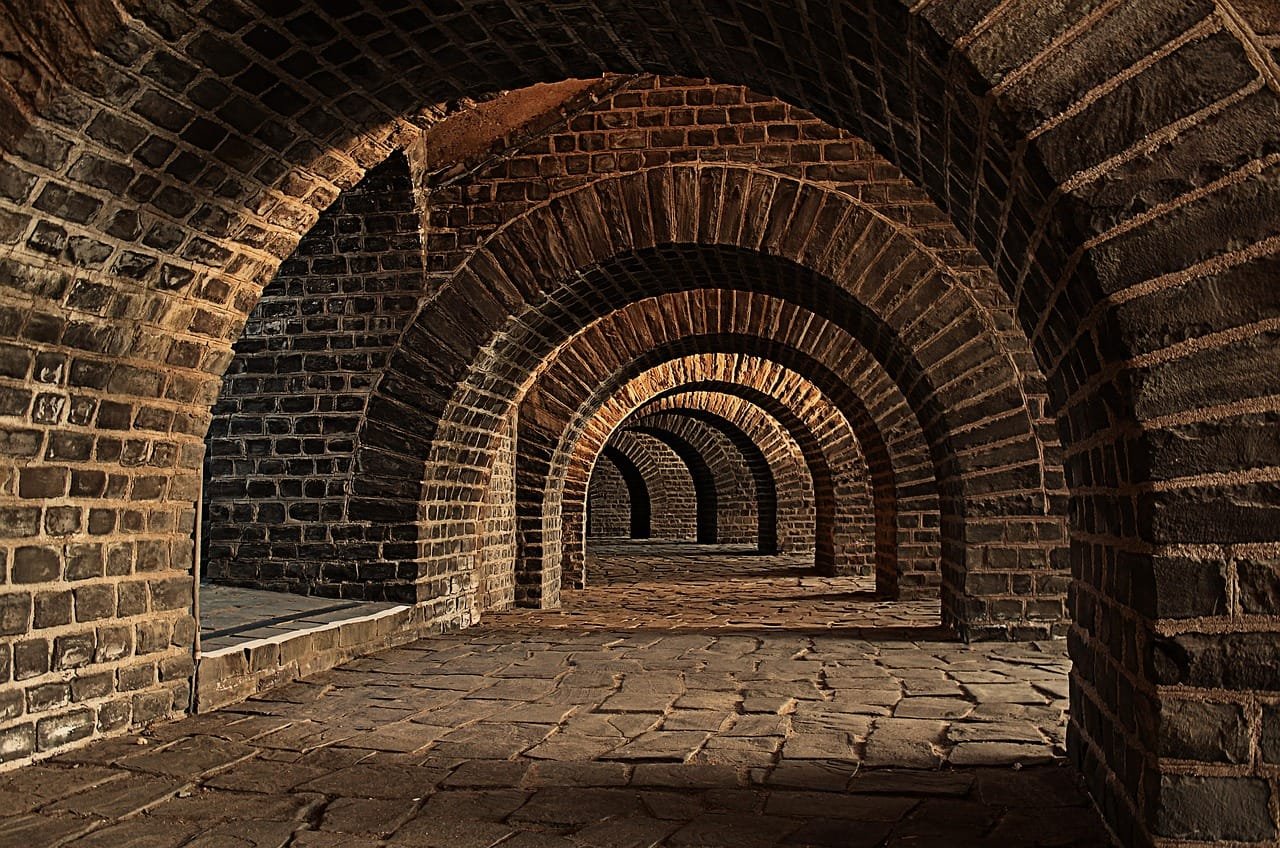
One or even a few cracks in cylindrical stone arches do not necessarily mean the arch has lost its load-bearing capacity. The study reports that failure occurs when cracks become enough conditional hinges to turn the arch into a kinematic mechanism.
Why the authors say this matters
The authors say this matters because standard methods are not suitable for analyzing arches with cracks. The study suggests that using interaction dependencies for the limiting ratios of bending moment and longitudinal force can help assess damaged vaults up to physical destruction.
What the researchers tested
The researchers developed and tested a methodology for assessing the load-bearing capacity of cylindrical stone arches with cracks. They used experimental masonry tests, identified interaction dependencies for the limiting ratios M Rd–N Rd, and verified a numerical model intended to help design those dependencies.
What worked and what didn't
The experiments showed that the load-bearing capacity depends on the ratio between bending moment M and longitudinal force N. Under bending moment alone, failure occurred along an unconnected masonry section; under compressive force alone, failure occurred through longitudinal cracks; under combined loading, the failure pattern depended on the force ratio. The verified numerical model could be used to design interaction dependencies.
What to keep in mind
The abstract does not describe the size of the experimental program or provide detailed limitations. The method is presented for cylindrical stone arches and vaults with cracks, so the scope appears limited to that structural type.
Key points
- Cracks in cylindrical stone arches do not always mean the load-bearing capacity is exhausted.
- Failure is linked to the number of cracks becoming enough conditional hinges to form a kinematic mechanism.
- The study uses interaction dependencies for limiting ratios of bending moment and longitudinal force.
- Experiments found different failure modes under bending-only, compression-only, and combined loading.
- A numerical model was verified for designing the interaction dependencies.
Disclosure
- Research title:
- Cracks do not always mean stone vault failure
- Publication date:
- 2026-03-30
- OpenAlex record:
- View
- Image credit:
- Pixabay • 132369 · Pixabay License
Get the weekly research newsletter
Stay current with peer-reviewed research without reading academic papers — one filtered digest, every Friday.