

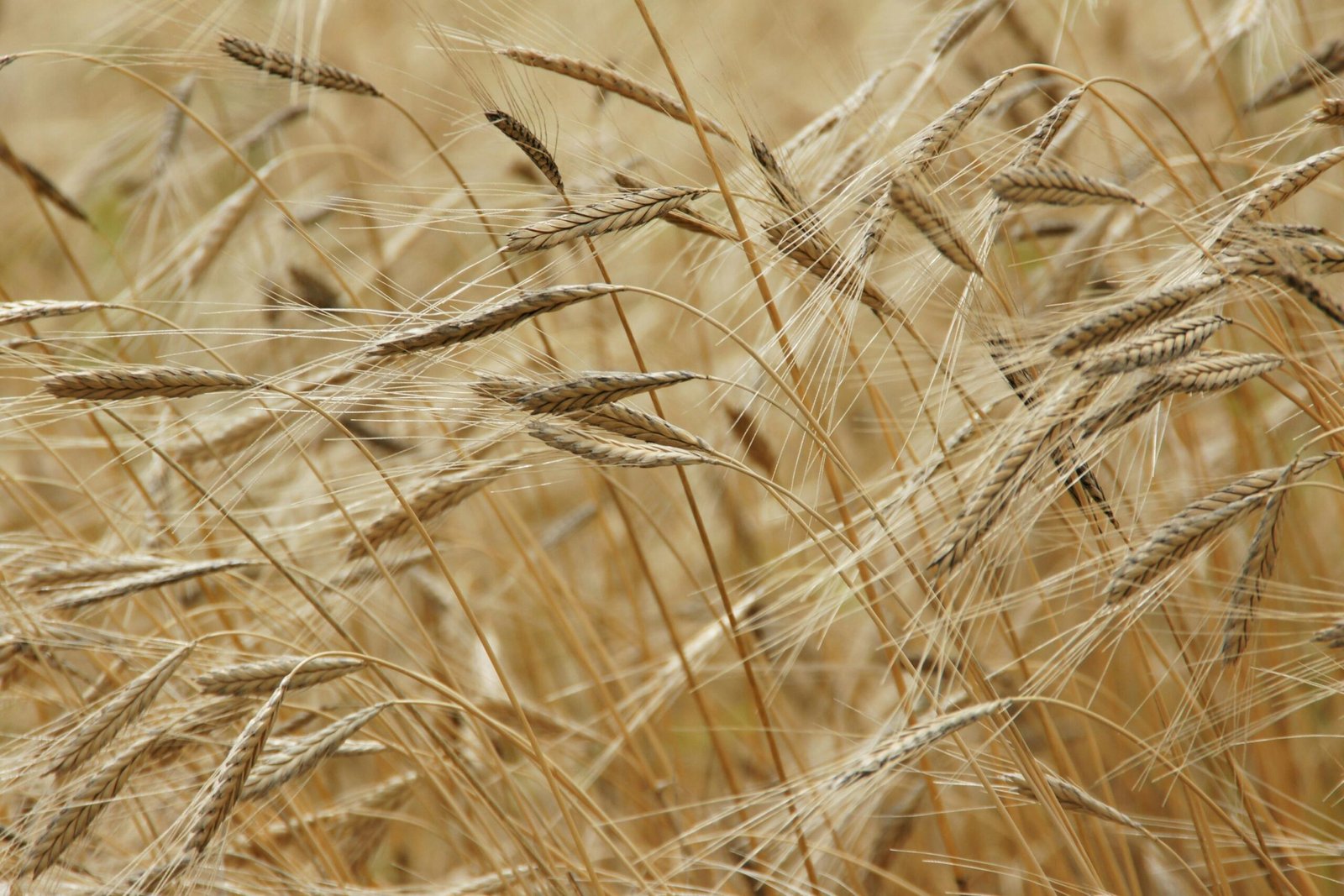
Researchers tested three planting densities to see how they affect the balance between leaf photosynthesis (the source) and grain development (the sink) in hybrid and conventional winter wheat under late-sowing conditions. A hybrid variety, Jingmai 17, and a conventional variety, Jimai 22, were compared across low, medium, and high densities. The medium density (300 plants·m−2) gave the largest yield increases for both varieties by keeping leaves active longer, moving more stored sugars into grains, and improving grain number and size. Jingmai 17 outperformed Jimai 22 in yield because it maintained stronger and longer-lasting photosynthesis, a larger and more stable grain sink, and better coordination between the two functions.
What the study examined
This study looked at how changing planting density affects the physiological balance between where carbohydrates are made (the source) and where they are used or stored (the sink) in winter wheat sown late in the season. Two wheat types were compared: a hybrid called Jingmai 17 and a conventional variety called Jimai 22. Three densities were tested: 150, 300, and 450 plants per square meter to see which density best supports yield under late sowing.
Key findings
The medium density, 300 plants·m−2, produced the most consistent increases in grain yield for both wheat types. At this density, plants maintained higher photosynthetic activity during the middle to late stages of grain filling and delayed leaf aging. That helped move more assimilates into grains and improved both the number of grains per spike and the weight of individual grains.
The hybrid Jingmai 17 showed a clear yield advantage over Jimai 22. Jingmai 17 combined a stronger and longer-lasting source function with a larger and more stable sink capacity, and it achieved higher efficiency in coordinating these two functions. As a result, the hybrid converted its physiological traits into higher yields under the tested late-sowing conditions.
Why it matters
Late sowing can reduce yield, so finding management steps that restore productive balance in the crop is valuable. This work indicates that a medium planting density can help plants keep leaves active longer, send more resources to developing grain, and improve key yield components. For farmers and breeders working with hybrid varieties, the results suggest that matching variety traits to an appropriate density can make the most of genetic potential even when sowing is delayed.
Overall, the findings offer a practical cultivation reference: using the identified density can optimize the relationship between carbon production and grain demand, supporting both higher and more stable yields in late-sown wheat planted with the tested hybrid variety.
Disclosure
- Research title: Optimizing Planting Density to Improve Source-Sink Relationship and Yield of Hybrid Wheat Under Late-Sowing Conditions
- Authors: Y. Zhang, Zixin Zhu, Changxing Zhao, Xiaoli Chen
- Institutions: Qingdao Agricultural University, Northwest A&F University, Northwest Institute of Mechanical and Electrical Engineering, Rural Resources
- Journal / venue: Plants (2026-01-08)
- DOI: 10.3390/plants15020195
- OpenAlex record: View on OpenAlex
- Links: Landing page • PDF
- Image credit: Image source: PEXELS (Source • License)
- Disclosure: This post was generated by Artificial Intelligence. The original authors did not write or review this post.