

Seasonal and gendered patterns in subsistence fishing and shellfish gathering: insights from Mfumbwi (Zanzibar) for archaeological interpretation and contemporary fisheries management

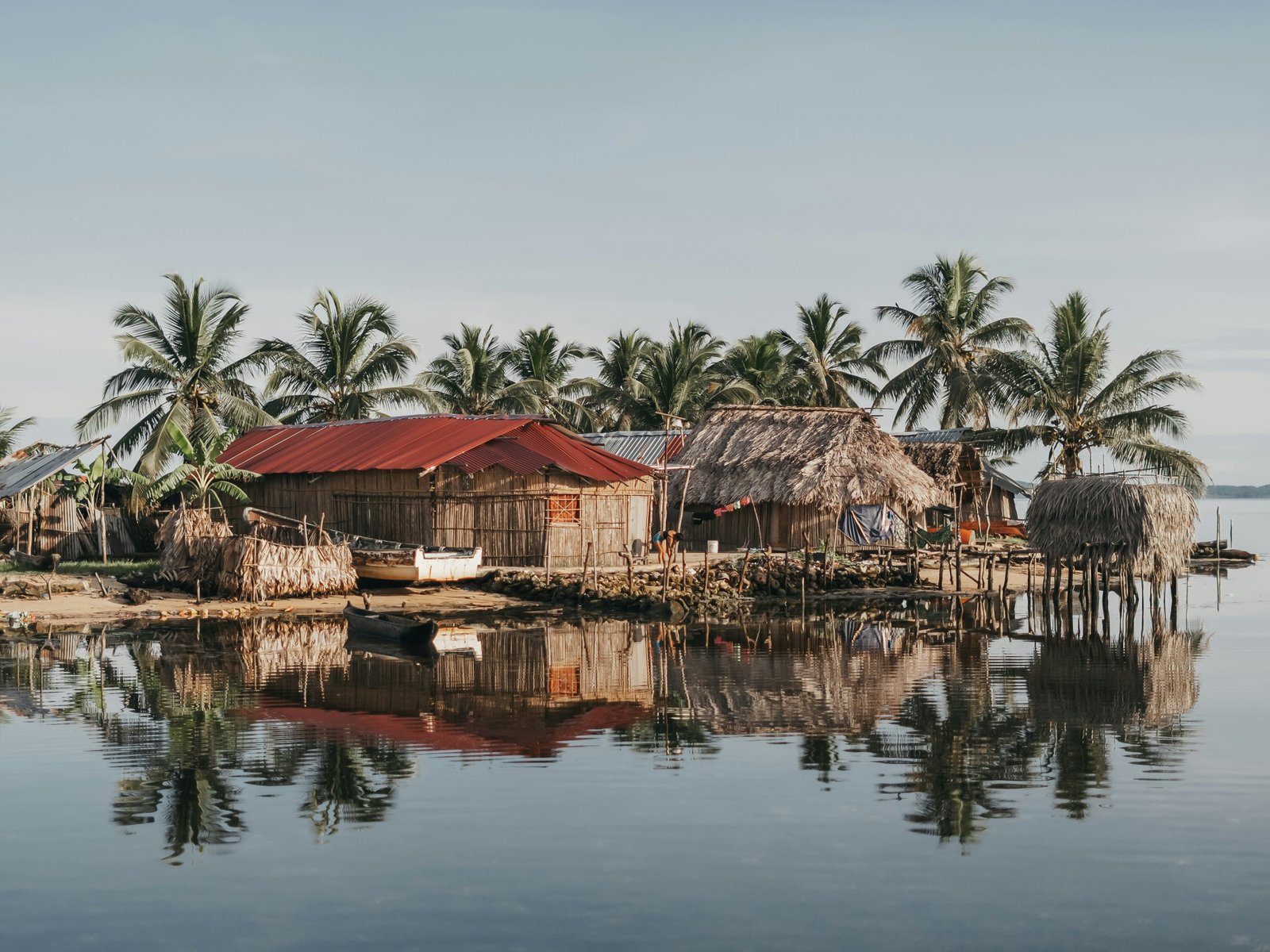
A tropical coastal village with traditional wooden structures with red and thatch roofs reflected in still water, surrounded by palm trees, showing what appears to be a subsistence fishing settlement.
Image Credit: Photo by Esrael Nate on Unsplash (SourceLicense)

AI Summary of Peer-Reviewed Research

This page presents an AI-generated summary of a published research paper. The original authors did not write or review this article. See full disclosure ↓

Frontiers in Environmental Archaeology·2026-01-29·Peer-reviewed·View original paper ↗·Follow this topic (RSS)
Publication Signals show what we were able to verify about where this research was published.STRONGWe verified multiple publication signals for this source, including independently confirmed credentials. Publication Signals reflect the source’s verifiable credentials, not the quality of the research.
  • ✔ Peer-reviewed source
  • ✔ Published in indexed journal
  • ✔ No retraction or integrity flags

Key findings from this study

  • The study found that monsoonal seasonality affected men's and women's marine subsistence harvesting differentially, reflecting intersections between climate regime and local gender ideologies.
  • The researchers demonstrate that men and women harvested distinct species rosters, likely reflecting different ecozone frequentation patterns tied to gender-specific labor practices.
  • The authors report that seasonal availability of harvested taxa resulted from combined influences including monsoonal climate effects, individual species behavioral ecology, and taxa-specific accessibility patterns.

Overview

This ethnographic study documents seasonal and gendered patterns of marine subsistence harvesting in Mfumbwi, Zanzibar Island, using data collected from June 2018 to June 2019. The research examines how monsoonal climate regimes and gender ideologies intersect to structure fishing and shellfish gathering practices among a maritime subsistence community.

Methods and approach

The researchers collected an extensive ethnographic maritime subsistence dataset across a 12-month period spanning both wet and dry seasons. Data collection documented harvesting activities, species composition, and behavioral patterns differentiated by gender. The study considered how individual taxa behavior, seasonal accessibility, and local gender ideologies collectively shaped subsistence practices.

Results

Seasonal variation driven by Zanzibar's monsoonal climate regime affected men and women differentially in their marine subsistence activities. The composition of species harvested varied significantly by gender, reflecting distinct ecozone preferences and access patterns for each gender. Seasonal availability and accessibility of specific taxa reflected both climatic influences and the behavioral ecology of individual species, with some taxa exhibiting non-climatically driven temporal patterns.

Multiple biological and cultural variables influenced the subsistence record documented in the dataset. These variables included the behavioral characteristics of harvested species, local ecological knowledge, gender-specific labor divisions, and cultural practices surrounding resource use. The interplay of these factors created complex patterns not reducible to single-factor explanations.

Implications

The findings demonstrate that maritime subsistence archaeological records reflect intersecting ecological, biological, and cultural factors beyond simple seasonal availability. Archaeological interpretation of Swahili coast faunal assemblages must account for gender-differentiated harvesting patterns and the ecological characteristics of target species. This approach applies broadly to Indian Ocean World maritime contexts where gendered labor divisions and seasonal resource access structured past subsistence economies.

Contemporary conservation and fisheries management in Zanzibar benefit from ethnographic documentation of traditional harvesting practices and their seasonal dynamics. Understanding how gender ideologies structure resource access provides essential context for designing equitable management policies. The study establishes that socio-ecological datasets can illuminate both historical subsistence patterns and current conservation priorities.

Scope and limitations

This summary is based on the study abstract and available metadata. It does not include a full analysis of the complete paper, supplementary materials, or underlying datasets unless explicitly stated. Findings should be interpreted in the context of the original publication.

Disclosure

  • Research title: Seasonal and gendered patterns in subsistence fishing and shellfish gathering: insights from Mfumbwi (Zanzibar) for archaeological interpretation and contemporary fisheries management
  • Authors: Akshay Sarathi, Patrick Faulkner, Benjamin J. Linzmeier, Abdallah K. Ali, H. Othman, Ally Ussi
  • Institutions: American University of Sharjah, Arkansas Museum of Discovery, Department of Archaeology, University of South Alabama
  • Publication date: 2026-01-29
  • DOI: https://doi.org/10.3389/fearc.2025.1732658
  • OpenAlex record: View
  • PDF: Download
  • Image credit: Photo by Esrael Nate on Unsplash (SourceLicense)
  • Disclosure: This post was generated by Claude (Anthropic). The original authors did not write or review this post.

Get the weekly research newsletter

Stay current with peer-reviewed research without reading academic papers — one filtered digest, every Friday.

More posts