

What the study found
Result-based payment contracts were more acceptable to dairy farmers in Poland than input-based schemes, and biofiltration was relatively favored among the methane mitigation measures. The study also found resistance to vaccination-based measures.
Why the authors say this matters
The authors conclude that aligning methane-mitigation policy with measured farmer participation can help link environmental effectiveness, behavioural feasibility, and public-budget efficiency. They say this is important for designing agri-environmental contracts under EU climate policy and the Common Agricultural Policy.
What the researchers tested
The researchers used a discrete choice experiment, a survey method that estimates preferences from choices, with 302 dairy farmers. They then embedded the preference-based participation probabilities into a cost-minimisation optimisation model to identify least-cost portfolios of methane mitigation measures under increasing reduction targets, comparing result-based and input-based contract designs.
What worked and what didn't
The results showed significantly higher acceptance of result-based contracts than input-based ones. Payment levels and environmental attitudes significantly influenced participation decisions, while vaccination-based measures were strongly resisted and biofiltration was relatively preferred.
What to keep in mind
The findings are scenario-based and depend on the mitigation and cost assumptions used in the model. The abstract also notes that the results are conditional on these assumptions and does not provide additional limitations.
Key points
- 302 Polish dairy farmers took part in a discrete choice experiment.
- Result-based contracts were more acceptable than input-based contracts.
- Biofiltration was relatively favored, while vaccination-based measures met strong resistance.
- Payment levels and environmental attitudes significantly influenced participation decisions.
- The optimization model suggested input-based schemes face participation limits beyond moderate mitigation targets.
Disclosure
- Research title:
- Result-based contracts appear more acceptable for dairy methane reduction
- Publication date:
- 2026-03-10
- OpenAlex record:
- View
- Image credit:
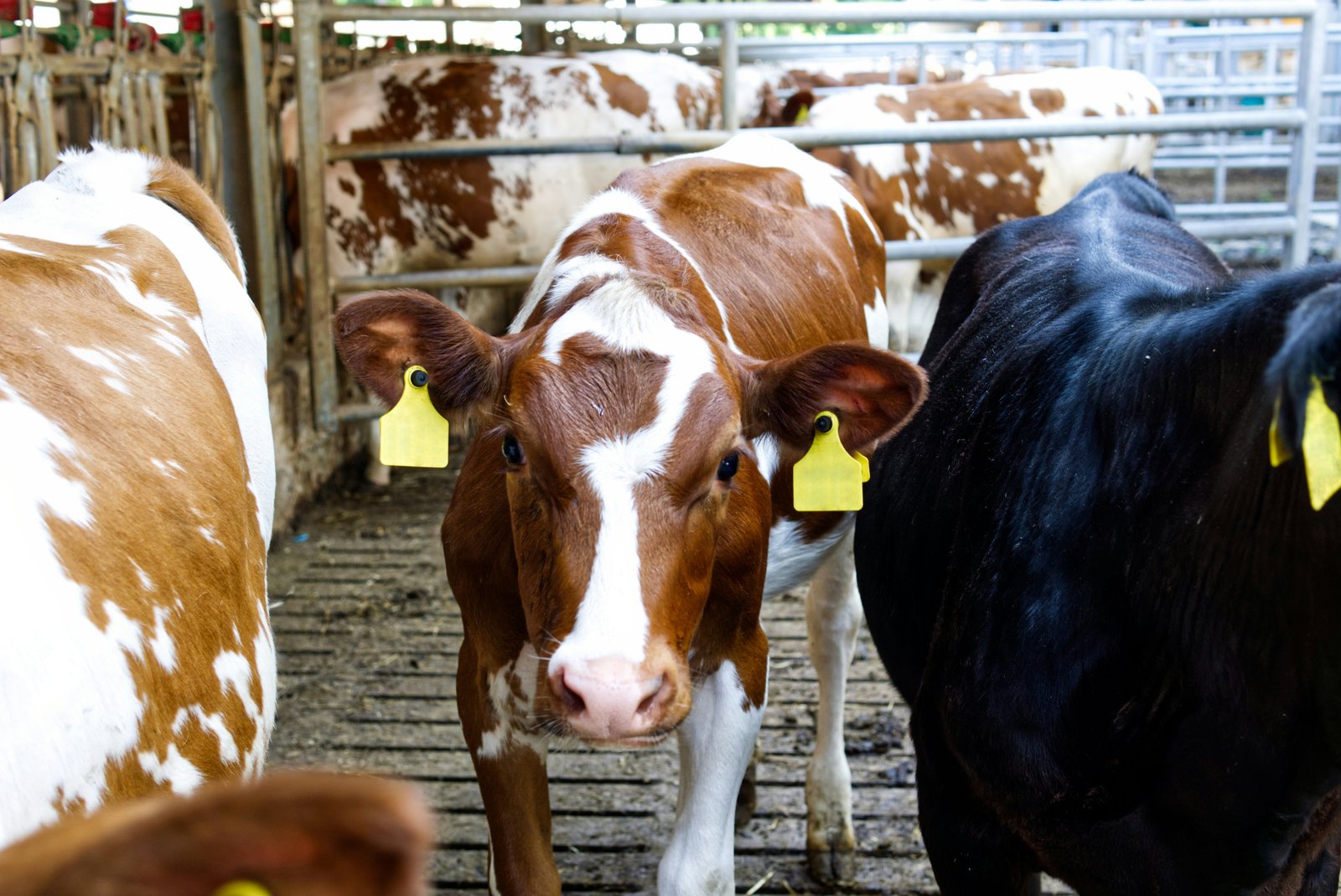
- Photo by Neil Bates on Unsplash · Unsplash License
Get the weekly research newsletter
Stay current with peer-reviewed research without reading academic papers — one filtered digest, every Friday.