

What the study found
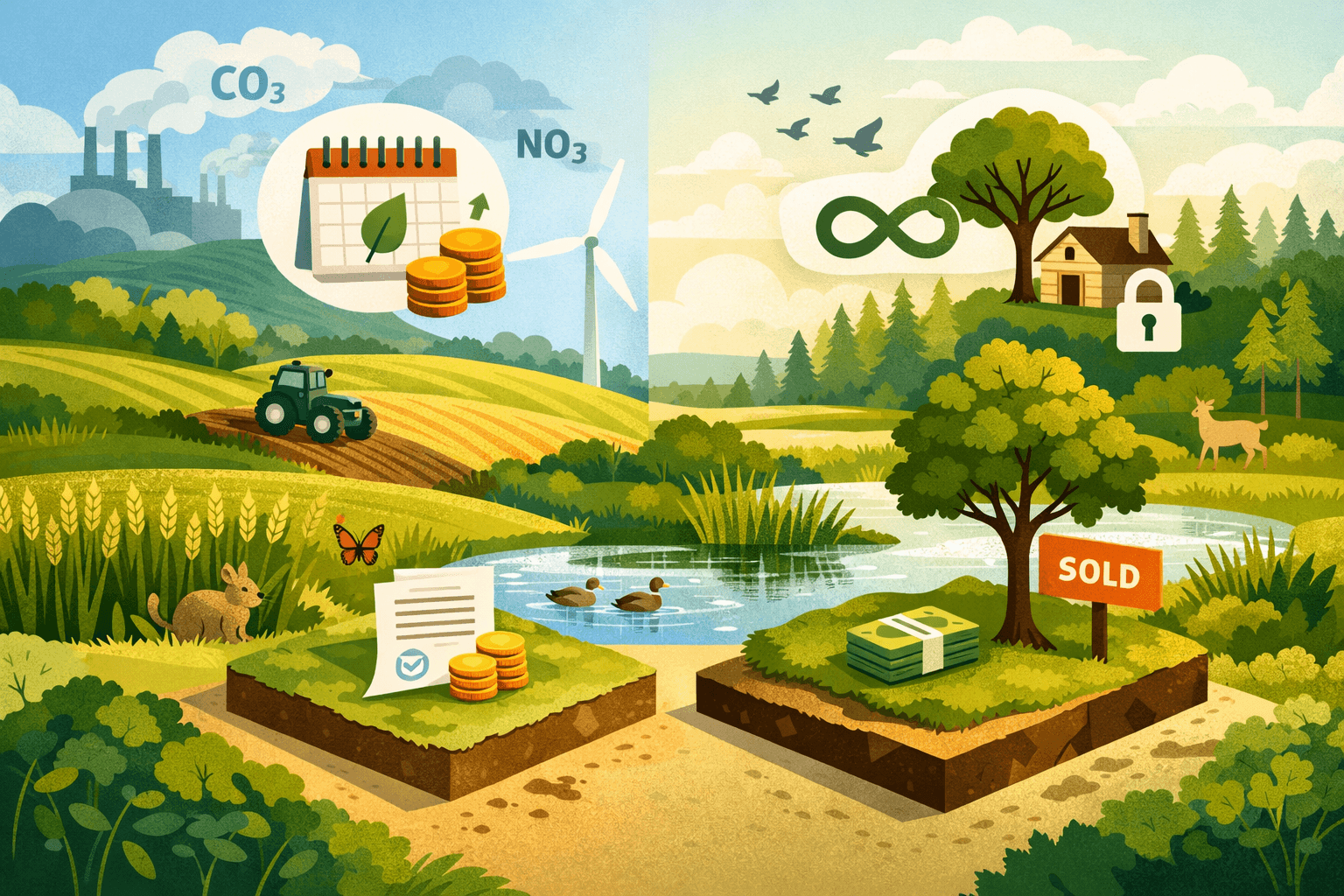
The study found that Danish landowners needed higher compensation when agri-environmental schemes required them to give up direct subsidy payments and hunting rights. It also found that longer temporary commitments and rewetting commitments in permanent schemes were associated with higher compensation needs.
Why the authors say this matters
The authors conclude that comparing implied discount rates from the experiment with current Danish agri-environmental schemes points to a policy design misalignment. They suggest that current policy favors flexible annual payments, while the societal benefits from permanent schemes are arguably higher.
What the researchers tested
The researchers used a choice experiment to compare Danish landowners' preferences for temporary and permanent agri-environmental schemes. They examined two land set-aside contracts: temporary schemes with annual payments and permanent schemes with a lump-sum payment.
What worked and what didn't
Landowners placed lower value on CAP direct payments when a CAP agricultural activity requirement was present in permanent contracts than when there was no activity requirement. The average implied discount rate was 3.3%–3.4% for schemes that mirror actual Danish annual and lump-sum permanent schemes, while the choice experiment suggested 1.9%–2.1%.
What to keep in mind
The summary only describes Danish landowners and the two set-aside contract designs studied here, so the findings may not apply beyond this context. The abstract does not describe additional limitations.
Key points
- The study compared Danish landowners' preferences for temporary and permanent agri-environmental schemes.
- Higher compensation was needed when schemes required giving up direct subsidy payments and hunting rights.
- Longer commitments in temporary schemes and rewetting commitments in permanent schemes also increased compensation needs.
- CAP direct payments were valued lower when a CAP agricultural activity requirement was included in permanent contracts.
- The implied discount rates from current Danish schemes were higher than those from the choice experiment.
- The authors describe a misalignment between current policy design and the comparison of discount rates.
Disclosure
- Research title:
- Landowners prefer higher compensation for some agri-environmental schemes
- Authors:
- Jakob Vesterlund Olsen, Thomas Lundhede, Kahsay Haile Zemo, Martin Hvarregaard Thorsøe, Mette Balslev Greve, Michael Friis Pedersen
- Institutions:
- Aarhus University, Aarhus University, University of Copenhagen, University of Copenhagen, University of Copenhagen, University of Copenhagen
- Publication date:
- 2026-03-09
- OpenAlex record:
- View
Get the weekly research newsletter
Stay current with peer-reviewed research without reading academic papers — one filtered digest, every Friday.