

What the study found
Thermal treatments changed whole-grain black wheat flour in several ways, and heat fluidization had the strongest overall effect. The study reports minimal loss in proximate composition, increased anthocyanin content, altered starch and protein structures, improved paste viscoelasticity, and reduced starch digestibility.
Why the authors say this matters
The authors conclude that thermal modifications, especially heat fluidization, are promising for improving the quality of whole-grain black wheat flour and for developing functional foods. Here, functional foods means foods designed to provide health-related benefits beyond basic nutrition, as the study presents it.
What the researchers tested
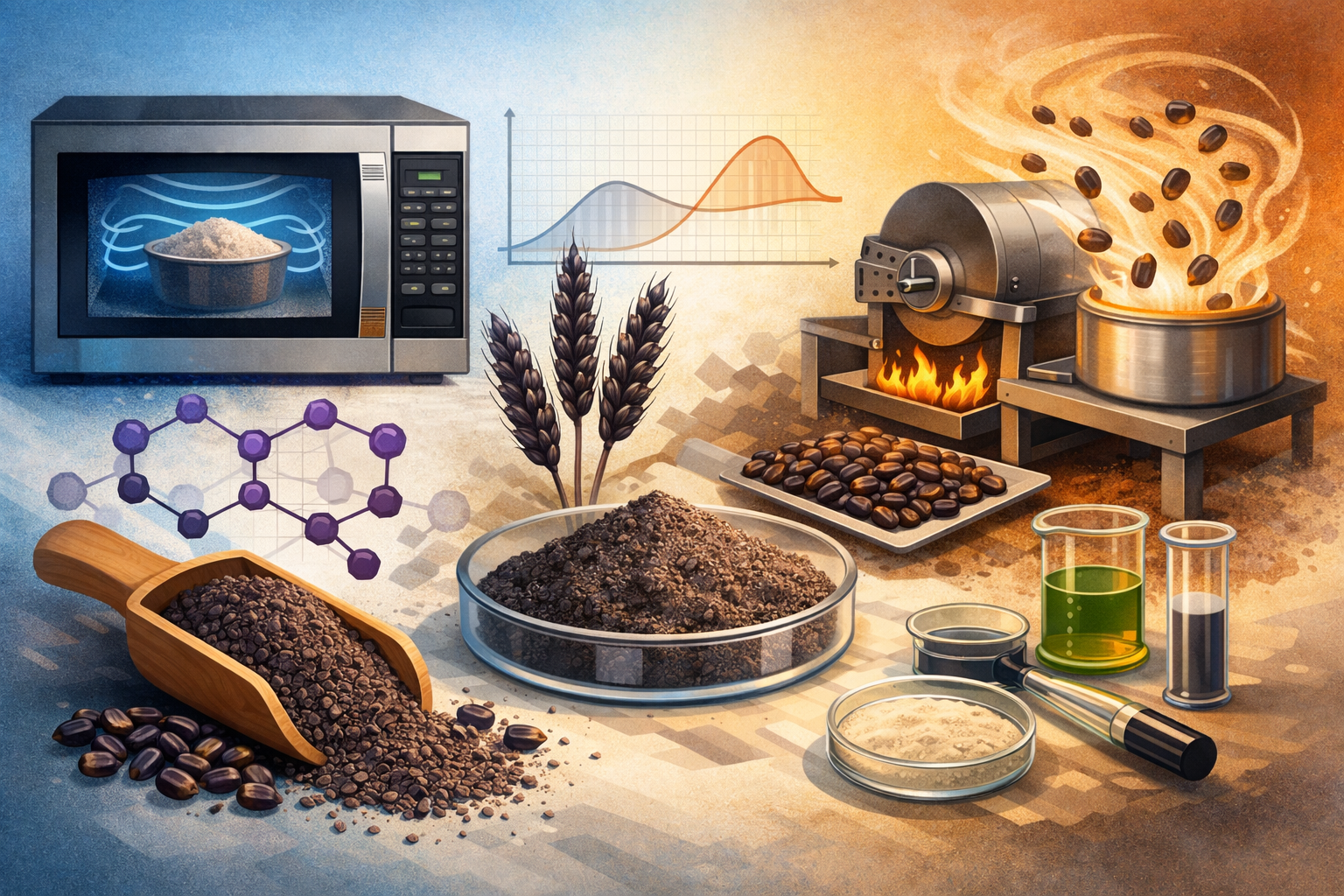
The researchers applied three thermal treatments to whole-grain black wheat flour: microwaving (MW-BW), roasting (RST-BW), and heat fluidization (HFL-BW). They then examined proximate composition, anthocyanin content, physical properties, microstructure, starch and protein structure, gelatinization and pasting behavior, paste viscoelasticity, and in vitro digestibility.
What worked and what didn't
All thermal treatments caused kernel swelling, darker flour color, reduced kernel hardness, and disruption of starch microstructure. They also reduced crystallinity, disrupted protein secondary structure, and led to gluten denaturation and aggregation, while decreasing gelatinization enthalpy and changing pasting viscosity.
In digestibility tests, thermal treatments decreased starch digestibility and protein bioavailability, and increased resistant starch content. The abstract reports that heat fluidization produced the most pronounced changes among the treatments.
What to keep in mind
The abstract does not provide detailed study limitations or longer-term outcome data. The findings are limited to the treatments and measurements described in the abstract, including in vitro digestibility rather than human digestion.
Key points
- Thermal treatments changed black wheat flour’s structure, functionality, and digestibility.
- Heat fluidization produced the most pronounced effects among the three treatments.
- Anthocyanin content increased after thermal treatment relative to the untreated control.
- All treatments reduced crystallinity and disrupted starch and protein structures.
- In vitro tests showed lower starch digestibility and higher resistant starch content.
Disclosure
- Research title:
- Thermal treatments changed black wheat flour properties and digestibility
- Publication date:
- 2026-02-23
- OpenAlex record:
- View
Get the weekly research newsletter
Stay current with peer-reviewed research without reading academic papers — one filtered digest, every Friday.