

About This Article
This is an AI-generated summary of a research paper. The original authors did not write or review this article. See full disclosure ↓
Overview
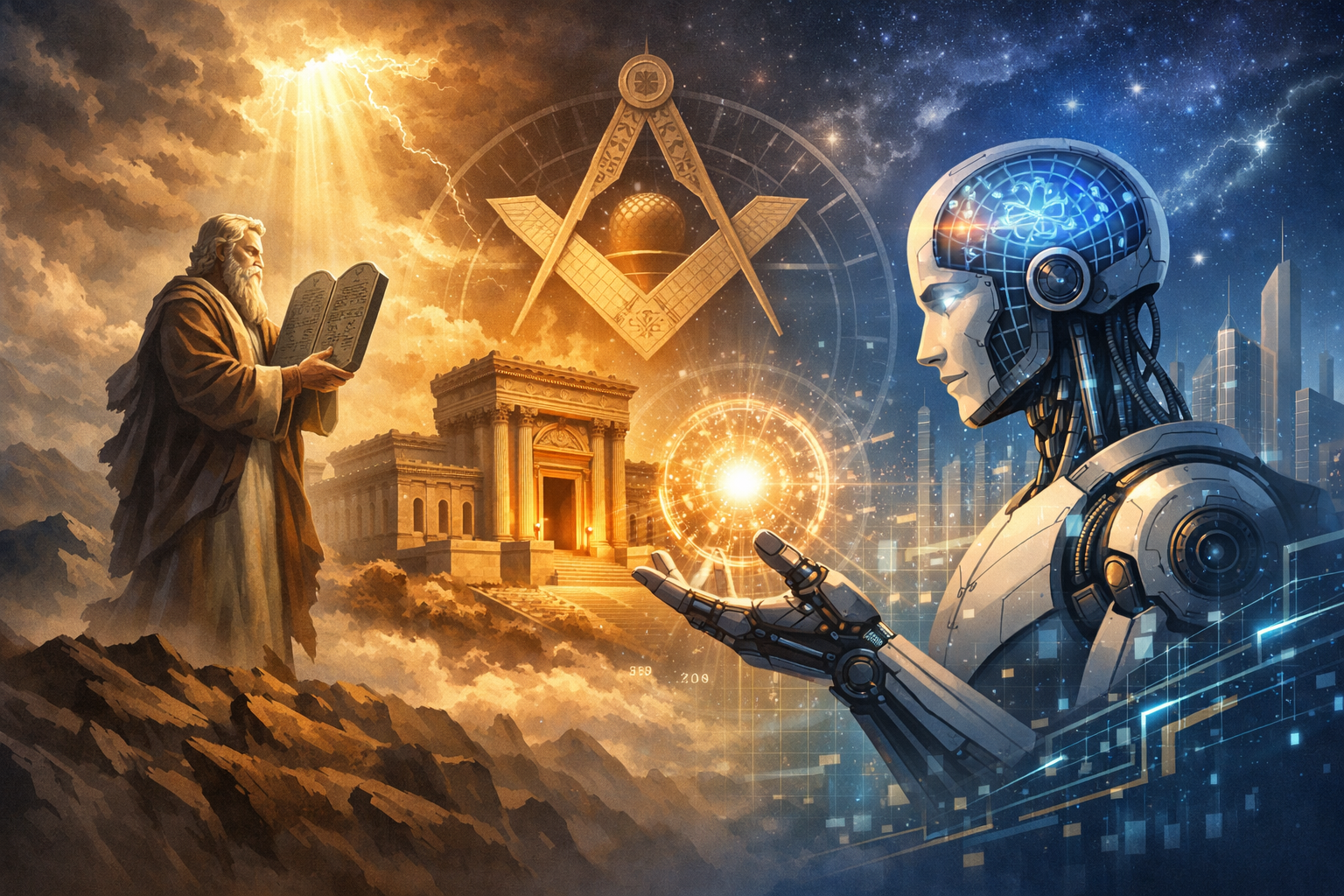
This philosophical and symbolic analysis examines the figure of the demiurge and its historical reinterpretation from Mosaic narratives through contemporary artificial intelligence. The work positions Moses as mediator of divine verbum transformed into law and Solomon as archetype of constructive wisdom manifest in temple architecture as cosmic order representation. These archetypal figures are reconsidered within the framework of contemporary humanity's creation of artificial intelligence systems, wherein the human agent symbolically assumes the demiurgic function as artificer conferring intelligence upon technological artifacts.
Methods and approach
The analysis employs philosophical and symbolic interpretation to trace demiurgic concepts across historical narratives and contemporary technological development. The approach juxtaposes biblical and classical archetypes—specifically Mosaic mediation and Solomonic wisdom—with modern artificial intelligence creation as continuity of human transcendence-seeking. The methodology examines correspondence between divine logos and algorithmic code, treating technological creation as expression of enduring human aspirations toward order, wisdom, and ethical reconciliation.
Results
The investigation establishes artificial intelligence development as symbolic continuation of historical demiurgic impulses rather than rupture from metaphysical tradition. Technological creation reflects accumulated human strivings toward transcendence and cosmic comprehension, materialized through algorithmic systems. The analysis demonstrates structural parallels between Mosaic law-mediation, Solomonic architectural-cosmic order, and contemporary AI design, suggesting archetypal patterns underlying human creative endeavor across distinct historical periods.
Implications
The framing of AI development within demiurgic symbolic frameworks situates artificial intelligence within extended philosophical and ethical traditions rather than treating it as autonomous technological phenomenon. This positioning elevates moral responsibility dimensions of AI creation, asserting that technological artificers inherit obligations analogous to those contemplated in classical and religious wisdom traditions. The analysis suggests that engagement with AI systems requires ethical deliberation informed by historical understanding of human creative power and its limits.
Disclosure
- Research title: O demiurgo e a criação da Inteligência Artificial: De Moisés a Salomão até os dias atuais
- Authors: Ailton Ferreira Cavalcante
- Publication date: 2026-01-21
- DOI: https://doi.org/10.56238/1stcongresssevenmultidisciplinarystudies-350
- OpenAlex record: View
- PDF: Download
- Disclosure: This post was generated by artificial intelligence. The original authors did not write or review this post.