Tag: Neuroscience and Neural Engineering

Closed-loop control improved facial prosthesis actuation in reinforced DEAs
—
in EngineeringWhat the study found A model-based closed-loop controller for reinforced dielectric elastomer actuators was able to improve actuation performance for a facial prosthesis. The designed prosthesis showed a root mean square error of 2.06% in response to electromyography signals from the zygomaticus major muscle, which is responsible for smiling. Why the authors say this matters…

Brief electrical stimulation induced ketamine-like plasticity in human neurons
—
in NeuroscienceBrief electrical stimulation produces ketamine-like structural plasticity in human dopamine neurons via calcium-dependent BDNF and mTOR signaling, reversing cortisol-induced damage.

Temporal interference stimulation may allow focal deep brain engagement
—
in MedicineTemporal interference stimulation enables focal, noninvasive deep brain neuromodulation for psychiatric disorders with reduced off-target effects compared to conventional transcranial electrical.

NeuroGator reduces BCI data throughput while maintaining accuracy
NeuroGator gates brain signal processing in implantable devices, reducing power consumption and data throughput by 82% while maintaining classification accuracy for next-generation BCIs.

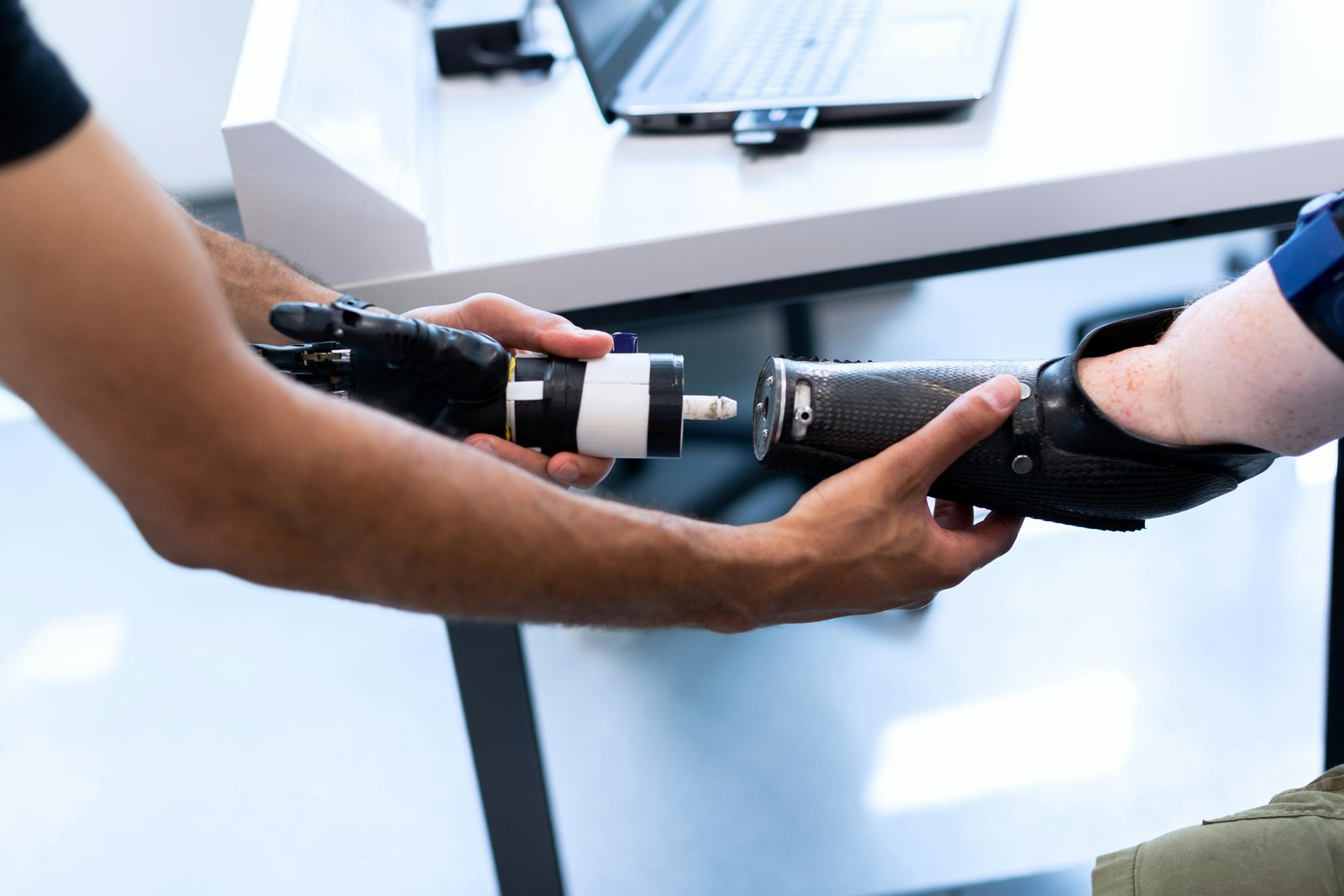
Bionic limbs are advancing toward more natural control
—
in EngineeringComprehensive review of bionic limb advancement, examining neural interfaces, sensory feedback, and AI-driven control alongside clinical implementation barriers and future development prospects.

Biomimetic conductive conduit aided long-gap nerve regeneration in rats
Composite nerve guidance conduit integrating silk fibroin, gelatin methacrylate, and polypyrrole for peripheral nerve regeneration with biomimetic structure and electroactive properties.

EV delivery of miR-181a-3p protected degenerating retinal ganglion cells
Extracellular vesicles deliver miR-181a-3p to protect degenerating retinal ganglion cells, offering a novel therapeutic approach for glaucoma and optic neuropathies through biocompatible gene.

Organic event-based sensors detect neural activity at low energy
Organic electrochemical neuron-based sensors achieve millisecond response times and kilohertz firing rates with picojoule energy consumption for closed-loop neurostimulation.