

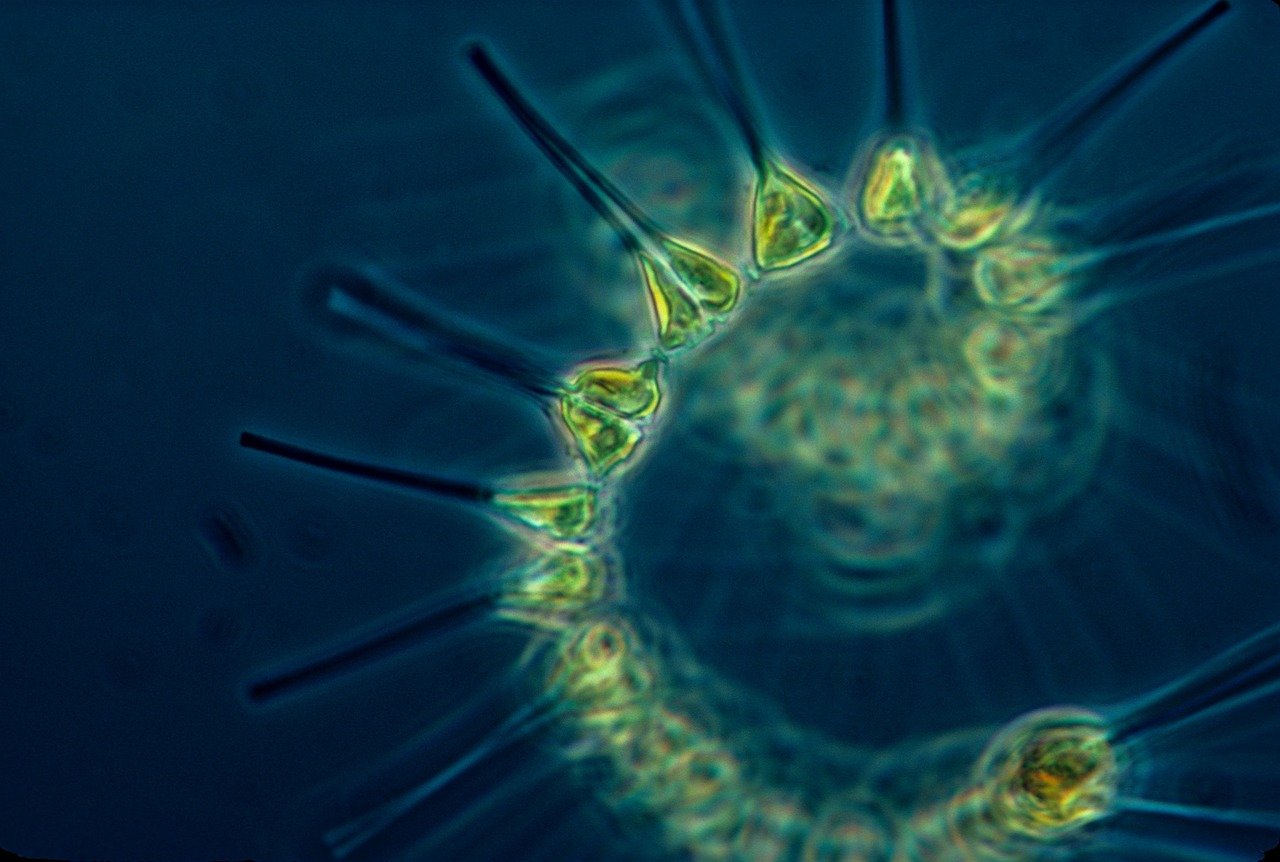
This study examines nutrient uptake, growth and size-related traits of diverse eukaryotic phytoplankton collected from the Galápagos Archipelago. Researchers measured metabolic parameters across a wide size range and tested how those traits scale with cell size. Results show diatoms grew faster than similarly sized taxa and followed different size-scaling patterns than non-diatoms. Larger diatoms had lower-than-expected carbon quotas, linked to large vacuoles, and the study also examined daily (diurnal) changes in physiology of the diatom Chaetoceros curvisetus.
What the study examined
This work focused on the functional traits that influence how primary producers use resources and respond to environmental change in the Galápagos Archipelago. The team measured traits that include cell size, nutrient quotas, growth rates and uptake rates across a set of diverse eukaryotic organisms spanning roughly two orders of magnitude in size.
Researchers tested allometric relationships—how metabolic parameters scale with body size—and looked for patterns or departures from expected scaling laws. The study also considered daily cycles by examining diurnal physiological changes in the diatom Chaetoceros curvisetus.
Key findings
Across the size range studied, many metabolic parameters showed relationships with cell size, but there were notable deviations from general allometric expectations. In particular, diatoms exhibited faster growth than other taxa of similar size, indicating a different scaling pattern for this group compared with non-diatoms.
- Carbon storage in larger diatoms was lower than predicted by common allometric rules; the presence of large internal vacuoles was identified as an explanatory factor.
- Diurnal cycles affected physiological traits in the examined diatom species, showing that daily rhythms play a role in its nutrient use and growth dynamics.
Why it matters
Understanding how metabolic traits scale with size and how particular groups deviate from those patterns helps clarify resource competition and resilience in a unique marine ecosystem. The finding that diatoms follow distinct scaling rules and store less carbon than expected in larger cells has implications for models of primary productivity and for interpreting how environmental change may affect biodiversity.
Examining daily physiological changes in a representative diatom adds another layer to predicting short-term variability in nutrient uptake and growth, which can influence broader food-web dynamics in the archipelago.
Disclosure
- Research title: Nutrient Uptake and Growth Kinetics of Novel Environmental Phytoplankton Isolates from the Galápagos Archipelago
- Authors: Margarita Lankford
- Journal / venue: UNC Libraries (2026-01-07)
- DOI: 10.17615/nwd7-w674
- OpenAlex record: View on OpenAlex
- Links: Landing page
- Image credit: Image source: PIXABAY (Source • License)
- Disclosure: This post was generated by Artificial Intelligence. The original authors did not write or review this post.