

About This Article
This is an AI-generated summary of a research paper. The original authors did not write or review this article. See full disclosure ↓
Overview
Holospinal subdural abscess represents an exceedingly rare infectious pathology of the spinal column with potential for severe neurological deterioration. This case documents a 54-year-old patient presenting with progressive dorsal pain and motor weakness without preceding trauma or procedural history. Imaging demonstrated extensive subdural collection spanning the entire spinal axis from cervical through sacral regions with anterior spinal cord compression. Microbiological analysis identified Staphylococcus aureus as the causative organism.
Methods and approach
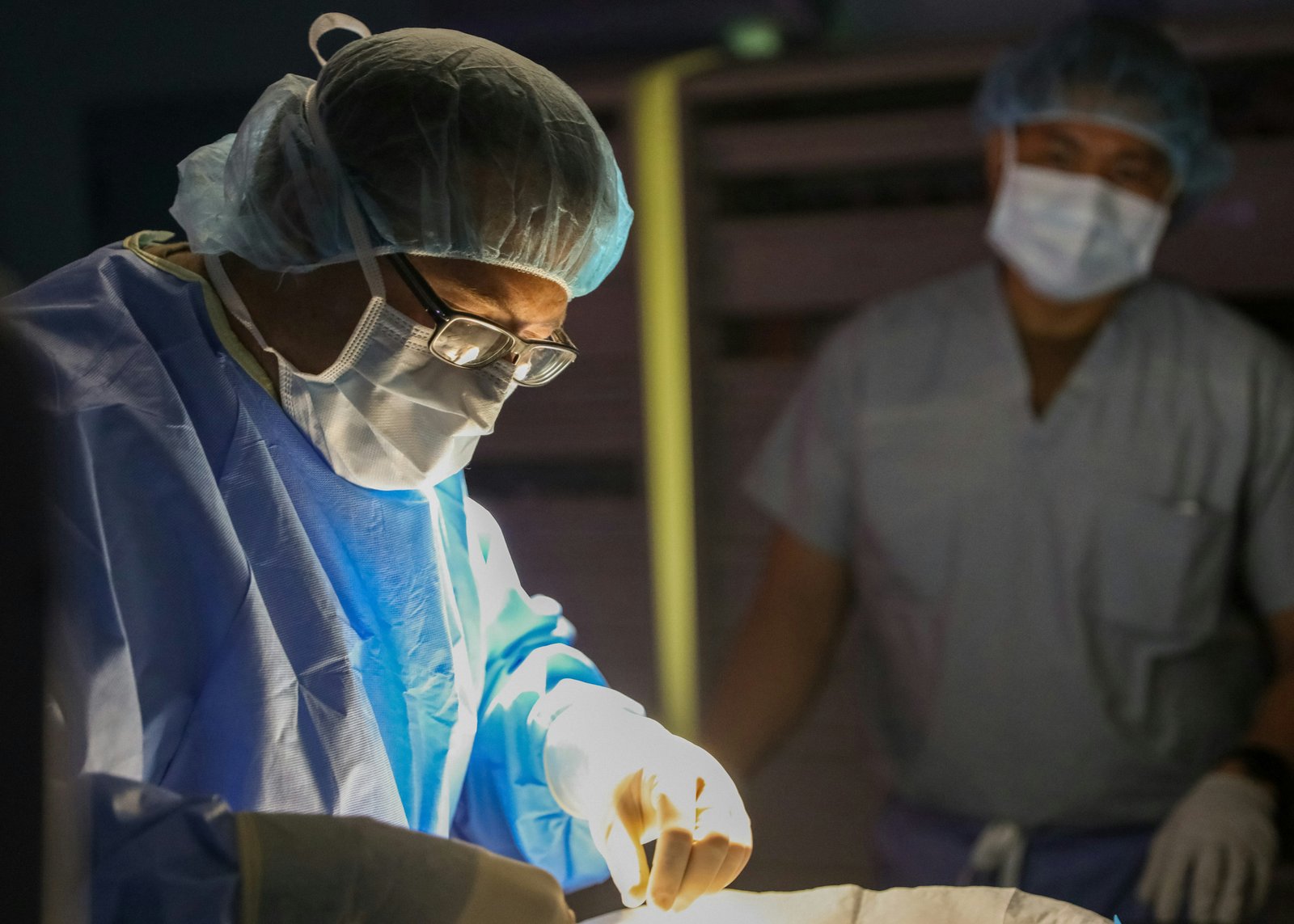
The patient underwent surgical intervention employing a minimally invasive skip-laminectomy technique designed to minimize tissue morbidity while achieving adequate decompression across multiple spinal levels. Limited segmental exposures facilitated subdural drainage and irrigation utilizing an external ventricular drainage catheter. The procedure prioritized selective decompression over extensive laminar removal. Postoperatively, targeted antimicrobial therapy was administered based on microbiological culture results. Subdural irrigation continued during the immediate recovery period.
Results
Complete neurological recovery was achieved following the combined surgical and pharmacological intervention. The minimally invasive approach successfully decompressed the spinal cord while preserving segmental stability across the affected regions. Effective pathogen elimination and inflammation resolution occurred through the coordinated surgical management and sustained antibiotic therapy with postoperative irrigation protocols.
Implications
Minimally invasive multilevel decompression with subdural drainage represents an effective surgical strategy for managing extensive spinal subdural infections while limiting iatrogenic structural damage. The selective skip-laminectomy approach permits adequate pathogen clearance and spinal cord decompression without sacrificing segmental stability. This technique may be generalizable to other cases of extensive spinal subdural collections where preservation of anatomical integrity is clinically advantageous. Early magnetic resonance imaging identification and prompt surgical intervention appear essential to prevent irreversible neurological sequelae in this pathology. Individualized surgical planning with attention to spinal biomechanics should guide therapeutic decision-making in rare holospinal infections.
Disclosure
- Research title: Minimally Invasive Multilevel Decompression and Irrigation for Holospinal Subdural Abscess: A Case Report
- Authors: Emre Özkara, Gizem Başyazıcı Ekinci, Zühtü Özbek
- Publication date: 2026-01-30
- DOI: https://doi.org/10.21182/jmisst.2025.02866
- OpenAlex record: View
- PDF: Download
- Image credit: Photo by Navy Medicine on Unsplash (Source • License)
- Disclosure: This post was generated by artificial intelligence. The original authors did not write or review this post.