

What the study found
Fire disturbance and forest cover jointly shaped bird dietary trait structure in tropical forest bird communities. The study found both trait convergence and trait divergence, depending on the dietary trait and landscape context.
Why the authors say this matters
The authors conclude that trait-based approaches can detect functional responses beyond species richness. They also say the findings reinforce the need to integrate fire management with habitat conservation to maintain functional integrity, meaning the retention of community trait structure, in fire-susceptible tropical forests.
What the researchers tested
The researchers studied 15 Atlantic Forest landscapes in southeastern Brazil, each with paired burned and unburned forest sites, for 30 sampling units in total. They surveyed birds with point counts and measured community trait structure using community-weighted means and variances from continuous dietary traits, estimated with nonparametric bootstrapping. They used generalized linear mixed models to test how fire severity, fire extent, and forest cover affected these trait metrics.
What worked and what didn't
Both community-weighted means and community-weighted variances were influenced by fire disturbance, and the responses were strongly modified by forest cover. Under high fire disturbance and low forest cover, variability in fruit, nectar, and invertebrate consumption was reduced, which the authors describe as trait convergence and environmental filtering. In burned forests, seed consumption showed increased variance, which the authors interpret as trait divergence consistent with limiting similarity under post-fire resource heterogeneity.
What to keep in mind
The abstract does not describe specific limitations beyond the study's landscape scope in the Atlantic Forest of southeastern Brazil. The findings are based on paired burned and unburned sites and on dietary traits measured for bird communities, so the summary is limited to those conditions.
Key points
- Fire disturbance and forest cover jointly influenced bird dietary trait structure.
- High fire disturbance and low forest cover were linked to reduced variability in fruit, nectar, and invertebrate consumption.
- Burned forests showed increased variance in seed consumption.
- The authors describe the reduced variability as trait convergence and environmental filtering.
- The authors say the increased seed-consumption variance is consistent with trait divergence and limiting similarity.
Disclosure
- Research title:
- Fire and habitat loss altered bird dietary trait structure
- Publication date:
- 2026-02-27
- OpenAlex record:
- View
- Image credit:
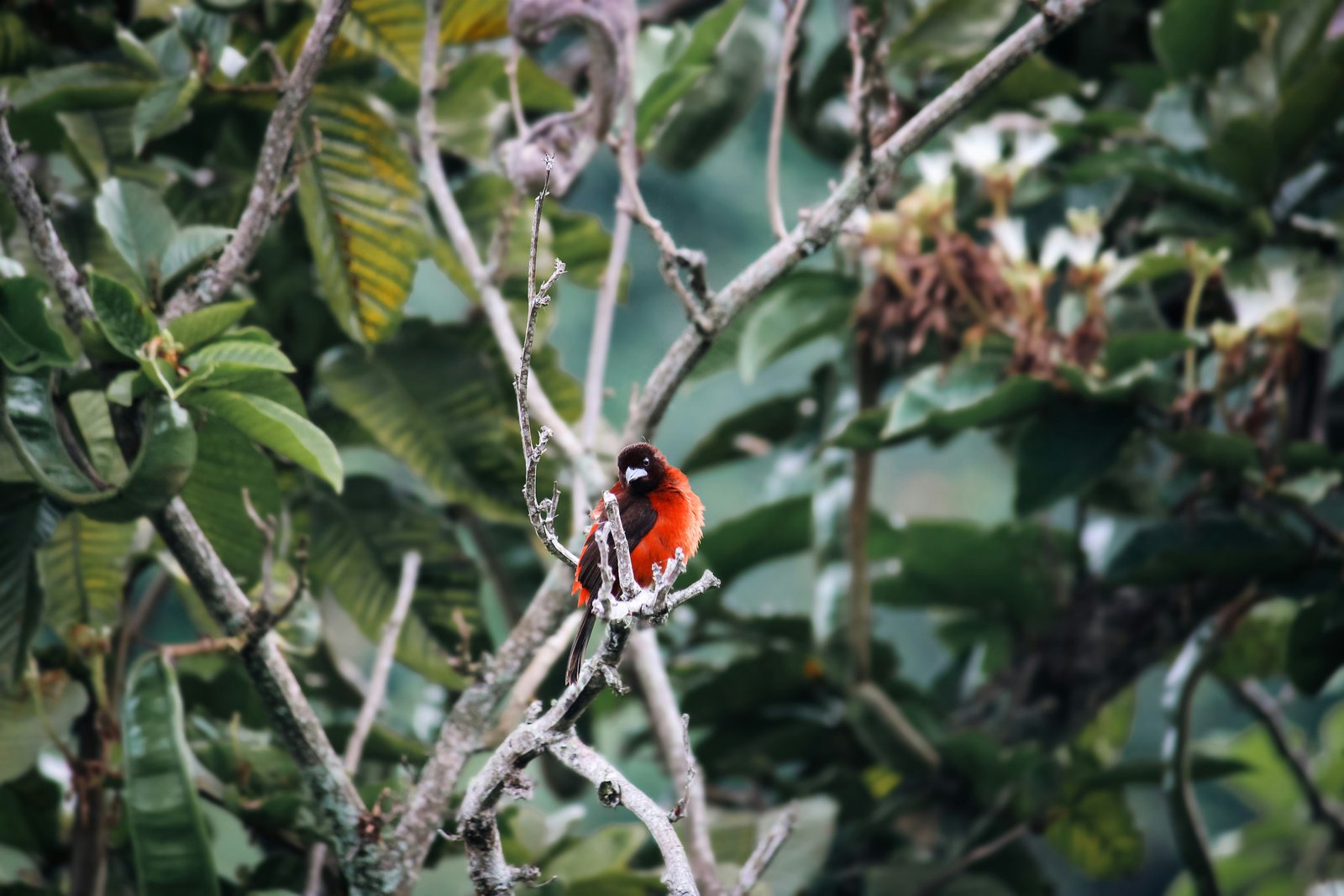
- Photo by WILLIAN REIS on Unsplash · Unsplash License
Get the weekly research newsletter
Stay current with peer-reviewed research without reading academic papers — one filtered digest, every Friday.