

What the study found
The study found that seed protein composition in grain amaranth has a strong genetic basis, especially for albumin and total protein. It also found 17 marker-trait associations that were stable across environments, while prolamin content was driven by environment-specific loci.
Why the authors say this matters
The authors conclude that the study provides environmentally stable markers and biological pathways that could help accelerate the development of nutritionally enhanced cultivars through marker-assisted selection. They also describe this as the first comprehensive genomic framework for seed protein composition in amaranth.
What the researchers tested
The researchers conducted a multi-environment genome-wide association study, or GWAS, which looks across the genome for DNA variants linked to traits, in a diversity panel of 192 grain amaranth accessions. They measured albumin, globulin, glutelin, prolamin, and total protein content using 41,931 SNPs, or single-letter DNA variants, and then assessed cross-environment stability and candidate genes.
What worked and what didn't
Phenotypic variation was observed for all protein fractions, and broad-sense heritability was high for albumin and total protein, with H2 at or above 0.91. The multi-locus GWAS identified 356 significant marker-trait associations, but only 17 remained robust across environments: 6 for total protein, 5 for albumin, 5 for glutelin, and 1 for globulin. Prolamin did not show stable loci across environments.
What to keep in mind
The study was based on 192 accessions from a diversity panel, so its results reflect that sampled material and the environments tested. The abstract does not describe any additional limitations.
Key points
- Albumin and total protein showed high broad-sense heritability (H2 ≥ 0.91).
- The study found 356 significant marker-trait associations across five protein-related traits.
- Seventeen associations were stable across environments.
- Prolamin content appeared to depend on environment-specific loci.
- Candidate genes suggested trans-regulatory control rather than cis-variation in storage structural genes.
- The abstract links glutelin accumulation to ABA biosynthesis and signaling, and globulin content to ER protein folding capacity.
Disclosure
- Research title:
- Seed protein composition in amaranth shows stable genetic markers
- Authors:
- Rashmi Chauhan, Sharat Prabhakaran, Dinesh Chandra Joshi, Rahul Chandora, J. P. Jaiswal, D. K. Pandey
- Institutions:
- Govind Ballabh Pant University of Agriculture and Technology, Govind Ballabh Pant University of Agriculture and Technology, Govind Ballabh Pant University of Agriculture and Technology, Govind Ballabh Pant University of Agriculture and Technology, ICAR-National Bureau Of Plant Genetic Resources, Indian Council of Agricultural Research, Institute of Plant Genetics, Polish Academy of Sciences, Vivekananda Parvatiya Krishi Anusandhan Sansthan
- Publication date:
- 2026-03-10
- OpenAlex record:
- View
- Image credit:
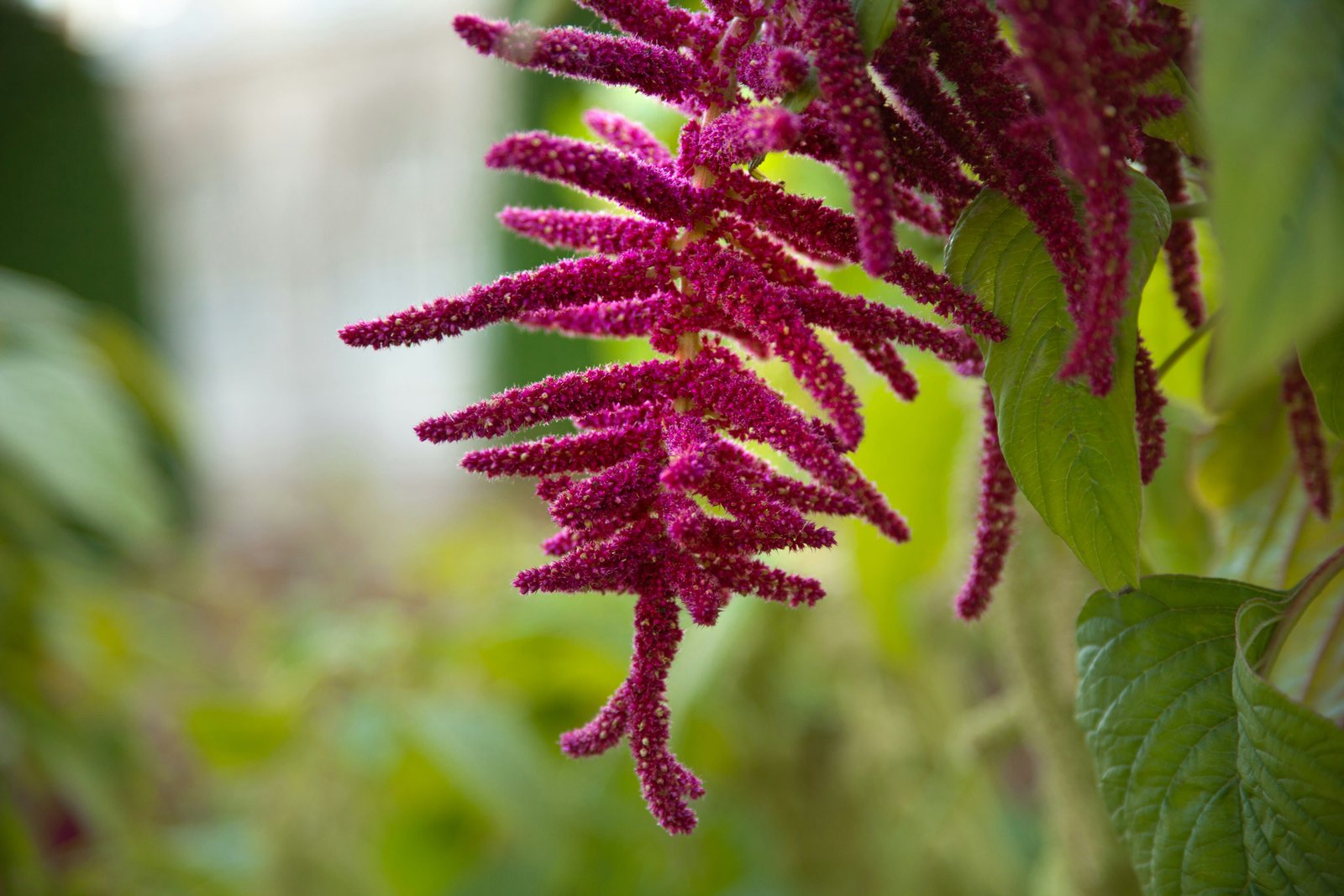
- Photo by Avrora Bch on Unsplash · Unsplash License
Get the weekly research newsletter
Stay current with peer-reviewed research without reading academic papers — one filtered digest, every Friday.