

What the study found
Supervised machine learning models performed well at classifying temporomandibular joint (TMJ) disc displacement on 3T magnetic resonance imaging (MRI). The strongest model by ROC-AUC was AdaBoost, and Gaussian Naïve Bayes had the most balanced overall performance.
Why the authors say this matters
The authors conclude that these models may support radiologic assessment by identifying MRI-based morphometric patterns related to TMJ disc displacement. They also state that clinical diagnosis should continue to rely on established standards of care.
What the researchers tested
The researchers conducted a retrospective study of 324 TMJs from 162 individuals who underwent 3T MRI. They extracted morphometric and signal intensity features, including condylar diameters, disc and condyle morphology, and lateral pterygoid muscle signal intensity ratios, and evaluated six supervised machine learning algorithms with stratified 5-fold cross-validation.
What worked and what didn't
All six models showed good classification performance, with ROC-AUC values above 0.80. AdaBoost achieved the highest ROC-AUC at 0.88, while Gaussian Naïve Bayes showed the most balanced overall metrics. Mediolateral condylar diameter and disc morphology were key features associated with disc displacement categories.
What to keep in mind
This was a retrospective study, and the abstract does not describe additional limitations. The authors note that clinical diagnosis should still follow established standards of care.
Key points
- Six supervised machine learning models were tested for TMJ disc displacement classification on 3T MRI.
- All models achieved ROC-AUC values above 0.80.
- AdaBoost had the highest ROC-AUC at 0.88.
- Gaussian Naïve Bayes showed the most balanced overall metrics.
- Mediolateral condylar diameter and disc morphology were key associated features.
Disclosure
- Research title:
- Machine learning models classified TMJ disc displacement well on MRI
- Publication date:
- 2026-01-28
- OpenAlex record:
- View
- Image credit:
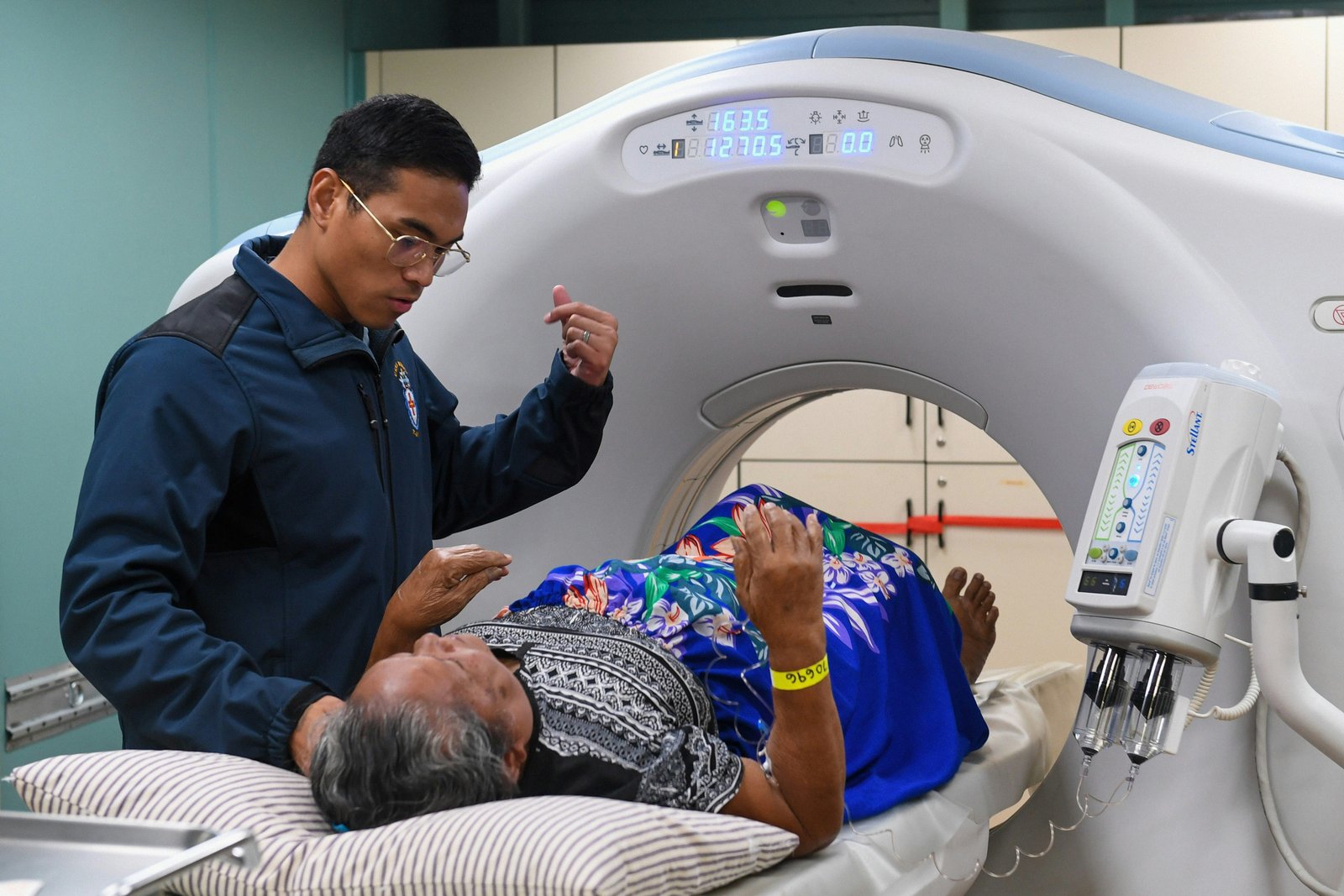
- Photo by Navy Medicine on Unsplash · Unsplash License
Get the weekly research newsletter
Stay current with peer-reviewed research without reading academic papers — one filtered digest, every Friday.