

What the study found
The study found that the reliability of six ancient DNA genetic relatedness estimation methods varies across several biological conditions. The authors conclude that sample coverage alone does not predict how well these methods will work, and that multiple sources of bias can affect them.
Why the authors say this matters
The authors say this matters because ancient DNA studies often involve few or poorly preserved samples, making practical reliability hard to judge. The study suggests that interpreting relatedness results in archaeological and funerary contexts should take method-specific strengths, limitations, and possible biases into account.
What the researchers tested
The researchers carried out a comparative study of six ancient DNA genetic relatedness estimation methods. They tested performance across five factors: sample coverage, post-mortem damage correction methods, human contamination, genetic diversity, and inbreeding.
What worked and what didn't
The abstract does not list each method's individual performance, only that the benchmark allowed the authors to discuss their strengths and limitations. It also states that reliability was not determined by sample coverage alone and could be influenced by several biases.
What to keep in mind
The summary does not provide the specific numerical results or method-by-method comparisons. It also does not describe the limitations of the benchmark beyond noting that performance depends on multiple biological parameters and sources of bias.
Key points
- Six ancient DNA relatedness estimation methods were compared.
- The benchmark tested five factors: coverage, damage correction, contamination, diversity, and inbreeding.
- Reliability could not be predicted from sample coverage alone.
- Multiple sources of bias may affect the methods' performance.
- BADGER was introduced as an automated pipeline for simulating pedigrees and generating raw ancient DNA sequence data.
Disclosure
- Research title:
- Ancient DNA relatedness methods vary in reliability across conditions
- Authors:
- Maël Lefeuvre, Marie‐Claude Marsolier, Céline Bon
- Institutions:
- CEA Paris-Saclay, Centre National de la Recherche Scientifique, Centre National de la Recherche Scientifique, Centre National de la Recherche Scientifique, Commissariat à l'Énergie Atomique et aux Énergies Alternatives, Institut de Biologie Intégrative de la Cellule, Musée de l'Homme, Musée de l'Homme, Musée de l'Homme, Université Paris Cité, Université Paris Cité, Université Paris Cité, Université Paris-Saclay
- Publication date:
- 2026-03-09
- OpenAlex record:
- View
- Image credit:
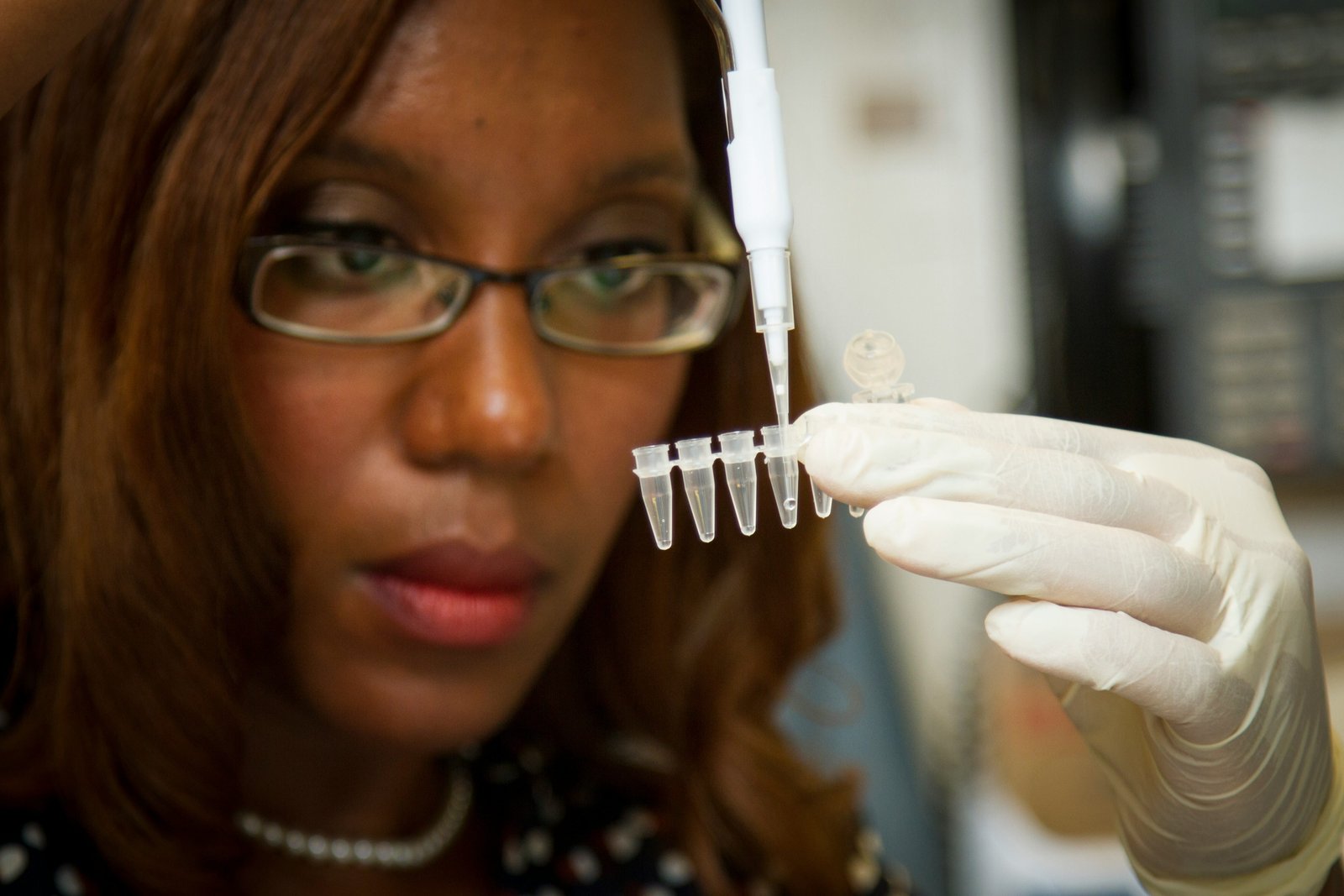
- Photo by National Cancer Institute on Unsplash · Unsplash License
Get the weekly research newsletter
Stay current with peer-reviewed research without reading academic papers — one filtered digest, every Friday.