

What the study found
The study found that individual differences in emotion regulation success were associated with systematic reconfiguration along Gradient 1, a principal axis that distinguishes unimodal and heteromodal brain areas. The same gradient-based pattern was also linked to lower negative affect in daily life in a smaller subset of participants.
Why the authors say this matters
The authors conclude that this gradient-based perspective offers a biologically grounded way to understand emotion regulation success. They also suggest that these dynamics may serve as predictive biomarkers of regulatory success and could inform targeted interventions in clinical populations.
What the researchers tested
The researchers analyzed two large functional magnetic resonance imaging (fMRI) datasets, with 358 and 263 participants, from a laboratory emotion regulation task. They projected global activation patterns onto principal gradients derived from independent resting-state fMRI data, and they also used smartphone-based experience sampling in a subset of 55 participants plus meta-analytic decoding with Neurosynth.
What worked and what didn't
In both datasets, emotion regulation success was associated with systematic reconfiguration along Gradient 1. The gradient-based neural pattern also related to lower negative affect in daily life, and meta-analytic decoding linked Gradient 1 and regulation success with social cognition, memory, attention, and negative emotion.
What to keep in mind
The abstract does not describe specific limitations. The daily-life finding came from a smaller subset of participants, and the study summary does not state whether the results establish causation.
Key points
- Emotion regulation success was associated with systematic reconfiguration along Gradient 1.
- Gradient 1 is described as a principal axis separating unimodal and heteromodal brain areas.
- The same gradient-based pattern was linked to lower negative affect in daily life in a subset of 55 participants.
- Neurosynth decoding connected Gradient 1 and regulation success with social cognition, memory, attention, and negative emotion.
- The study used two large fMRI datasets and a laboratory emotion regulation task.
Disclosure
- Research title:
- Emotion regulation success tracks large-scale brain gradient reconfiguration
- Authors:
- Ruien Wang, Rémi Janet, Carmen Morawetz, Anita Tusche
- Institutions:
- Centre National de la Recherche Scientifique, Institut des Sciences Cognitives, Queen's University, Queen's University, Queen's University, Universität Innsbruck
- Publication date:
- 2026-04-02
- OpenAlex record:
- View
- Image credit:
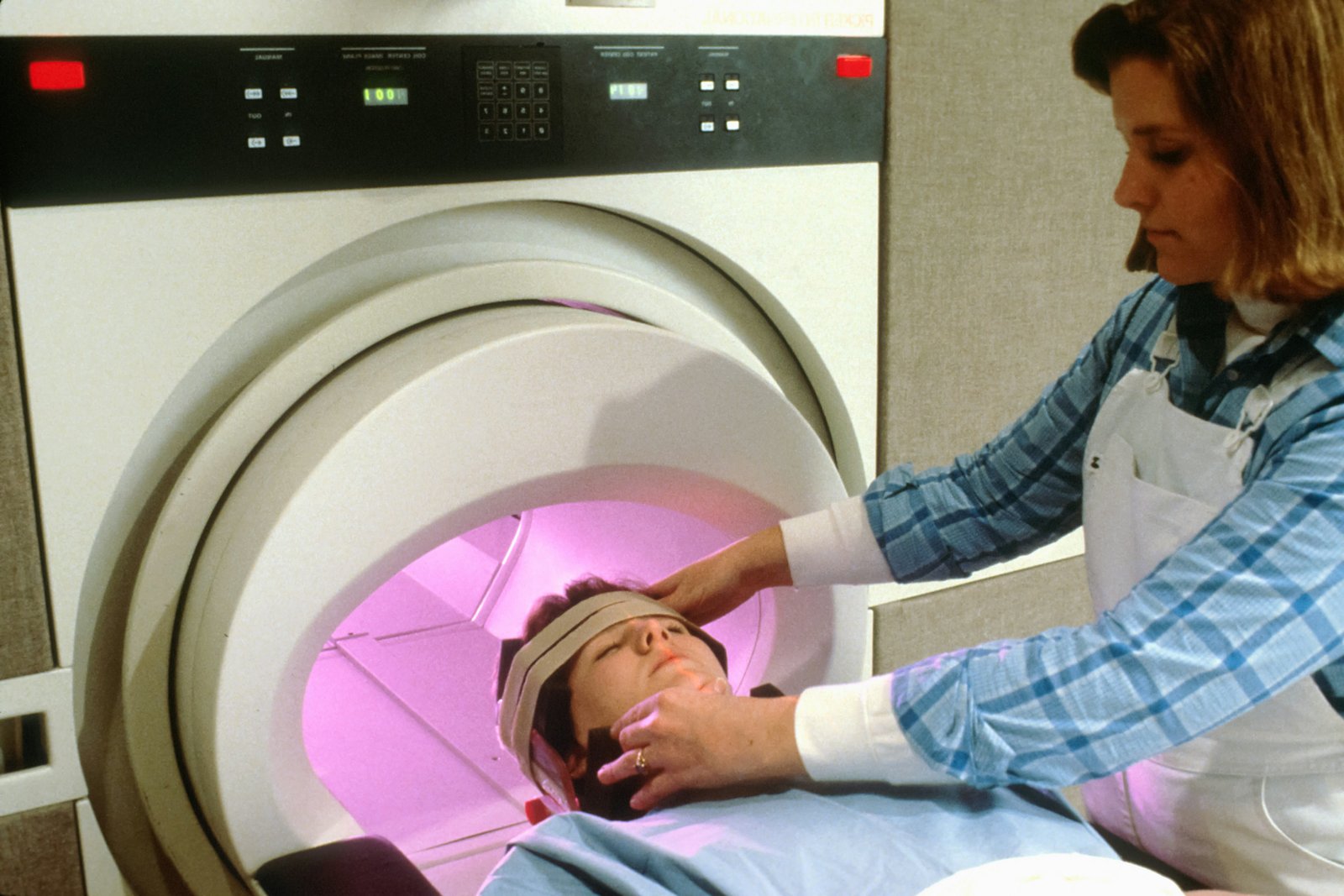
- Photo by National Cancer Institute on Unsplash · Unsplash License
Get the weekly research newsletter
Stay current with peer-reviewed research without reading academic papers — one filtered digest, every Friday.