

What the study found
Canopy temperature in wheat was shown to be a dynamic trait rather than a stable single-value measure. The study found that its patterns depended on time of day, phenological stage (the plant's stage of development), and growing environment.
Why the authors say this matters
The authors conclude that single-time-point canopy temperature measurements give an incomplete view of thermal status. They suggest that breeding and physiological interpretation under drought and heat need multi-temporal protocols and measurement windows matched to the specific environment and stage.
What the researchers tested
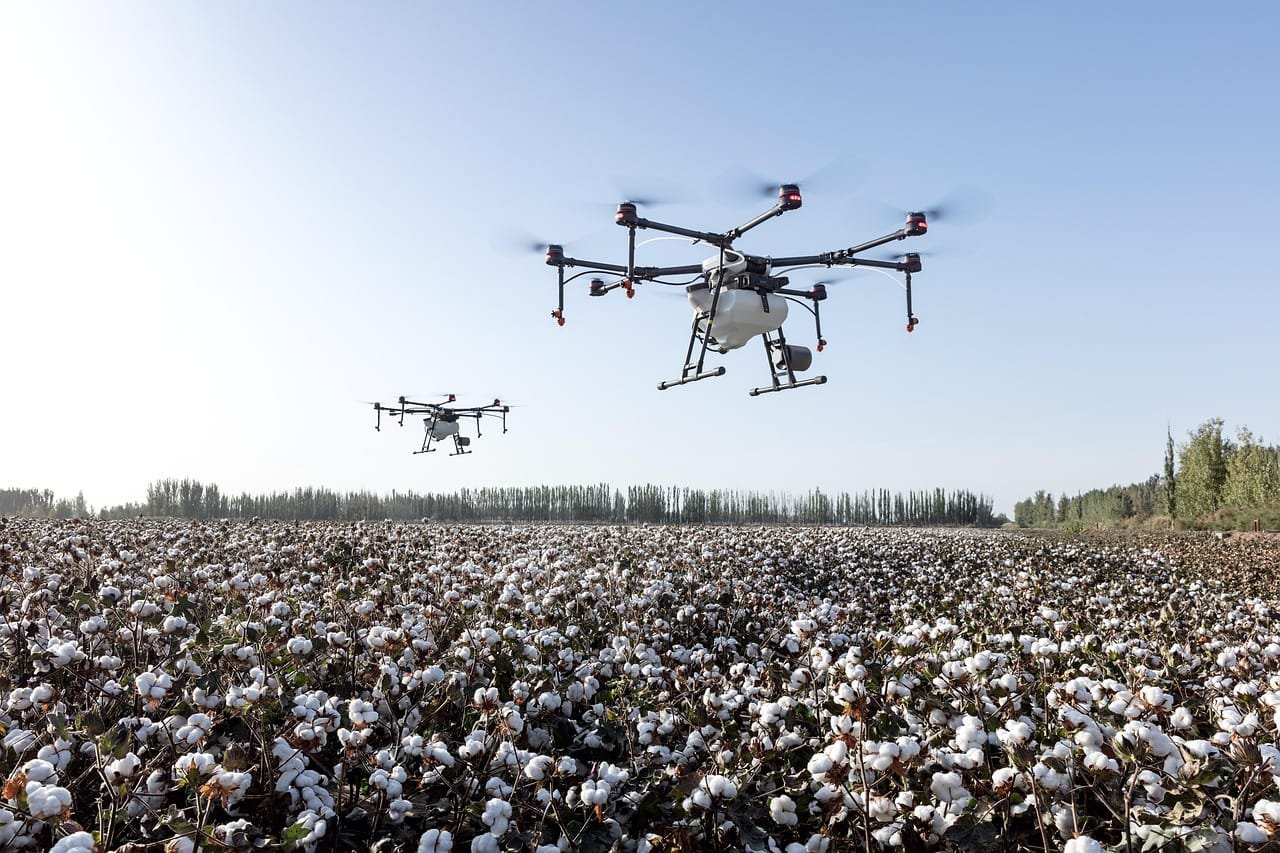
The researchers monitored 184 spring wheat genotypes in two Mediterranean environments: fully irrigated and rainfed conditions with contrasting atmospheric demand. They used UAV-based thermal imaging at six times per day from 10:30 to 17:30 across four reproductive stages: anthesis, milk-grain, milk-dough, and dough.
What worked and what didn't
Repeated-measures mixed models showed that location, stage, time of day, and all their interactions were highly significant. Genotypic effects were strong within each stage-by-environment combination, with 87.6% to 97.7% of total variance attributed to genotype across hours. Under rainfed conditions, genotype separation peaked around mid-afternoon, while under irrigation the best window shifted with stage; genotype rankings were also less stable across hours in rainfed conditions.
What to keep in mind
The abstract does not describe limitations beyond the context of two Mediterranean environments and the stages measured. The findings are specific to the tested wheat genotypes, the recorded hours, and the conditions studied.
Key points
- Canopy temperature in wheat changed with time of day, stage, and environment.
- Among-hour genetic differences were strong, with 87.6% to 97.7% of variance attributed to genotype within stage-by-environment combinations.
- The best time to distinguish genotypes depended on conditions: around 15:00 under rainfed conditions and 13:30 to 15:00 under irrigation.
- Genotype rankings were less stable across hours under rainfed conditions, showing within-day re-ranking.
- CT above 32 °C depended strongly on time of day and stage, and maximum CT captured short heat events missed by daily means.
Disclosure
- Research title:
- Canopy temperature in wheat varied by time of day and growth stage
- Authors:
- Jesús Flores-Olave, Hamza-Ali Khan, Isadora Pérez, Josefa Pacheco, José Cares, Carlos Araya-Riquelme, Felipe Moraga, Ivan T. Matus, Dalma Castillo, Luis Inostroza, Manuel A. Bravo, Hanns de la Fuente-Mella, Gonzalo Ríos-Vásquez, Alejandro del Pozo, Gustavo A. Lobos
- Institutions:
- Instituto de Investigaciones Agropecuarias, Instituto de Investigaciones Agropecuarias, Instituto de Investigaciones Agropecuarias, Pontificia Universidad Católica de Valparaíso, Pontificia Universidad Católica de Valparaíso, Pontificial Catholic University of Valparaiso, Universidad Andrés Bello, University of Talca, University of Talca, University of Talca, University of Talca, University of Talca, University of Talca, University of Talca
- Publication date:
- 2026-03-05
- OpenAlex record:
- View
- Image credit:
- Pixabay • DJI-Agras · Pixabay License
Get the weekly research newsletter
Stay current with peer-reviewed research without reading academic papers — one filtered digest, every Friday.