

What the study found
The study found that Kiswahili is the dominant language on religious signboards in Dar es Salaam’s worship spaces. It also found that English, Chinese and Arabic appear on some signs and may create barriers for many Tanzanians. The authors report that visual features such as colour, images of ministers, and digital platform references also shape how these spaces communicate.
Why the authors say this matters
The authors conclude that worshipscape signs affect access to religious information and reflect broader power dynamics in information accessibility. The study suggests that language use on these signs also communicates inclusivity, prestige, identity and audience targeting. It further argues that focusing on worshipscapes adds new insight into religious communication in multilingual urban spaces.
What the researchers tested
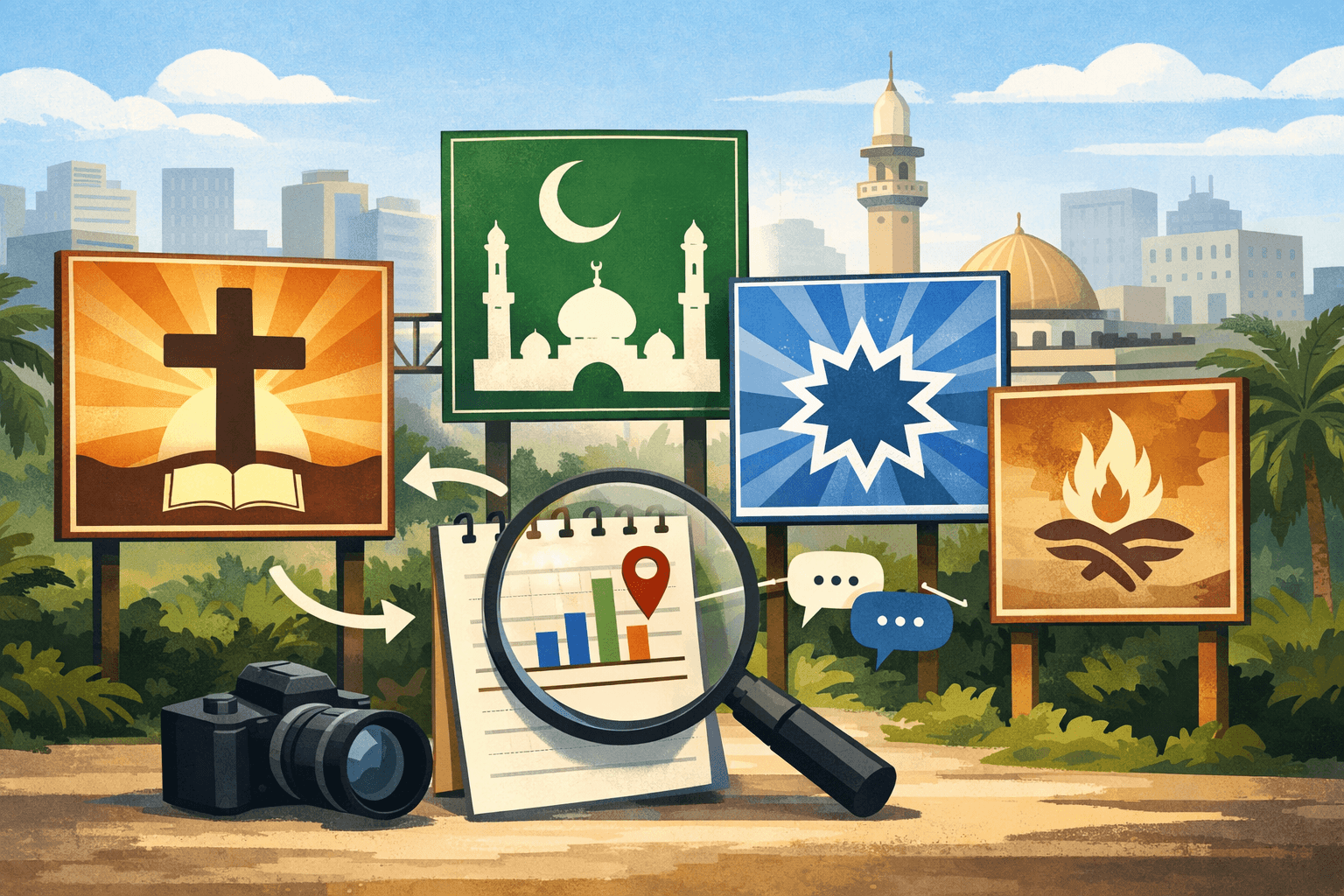
The researchers used a qualitative approach grounded in social semiotics and sociolinguistic theories. They collected data between 2024 and 2025 through field observation and photography in four municipalities of Dar es Salaam. They purposively selected 97 signboards from Christian, Islamic, Bahá’í and other religious institutions and analyzed them with multimodal social semiotic frameworks and content analysis.
What worked and what didn't
Kiswahili worked as a unifying language that promoted inclusivity and national identity on worshipscape signs. English was associated with prestige, elitism and global belonging, according to the findings. The presence of English, Chinese and Arabic introduced linguistic barriers for many Tanzanians, while semiotic elements such as colour and images helped shape how the signs communicated.
What to keep in mind
The summary describes one urban setting: Dar es Salaam, Tanzania. The abstract does not provide detailed limitations beyond the focus on worshipscapes and the selected signboards. It also does not give numerical breakdowns of languages or sign types beyond the total of 97 signboards.
Key points
- Kiswahili was the dominant language on religious signboards in Dar es Salaam.
- English on signboards was linked to prestige, elitism and global belonging.
- Chinese and Arabic were also present and were described as barriers for many Tanzanians.
- Colour, minister images and digital platform references were part of the signs' meaning-making.
- The study analyzed 97 signboards from Christian, Islamic, Bahá’í and other religious institutions.
Disclosure
- Research title:
- Kiswahili dominates religious signboards in Dar es Salaam
- Authors:
- Paschal Charles Mdukula
- Institutions:
- University of Dar es Salaam
- Publication date:
- 2026-01-27
- OpenAlex record:
- View
Get the weekly research newsletter
Stay current with peer-reviewed research without reading academic papers — one filtered digest, every Friday.