

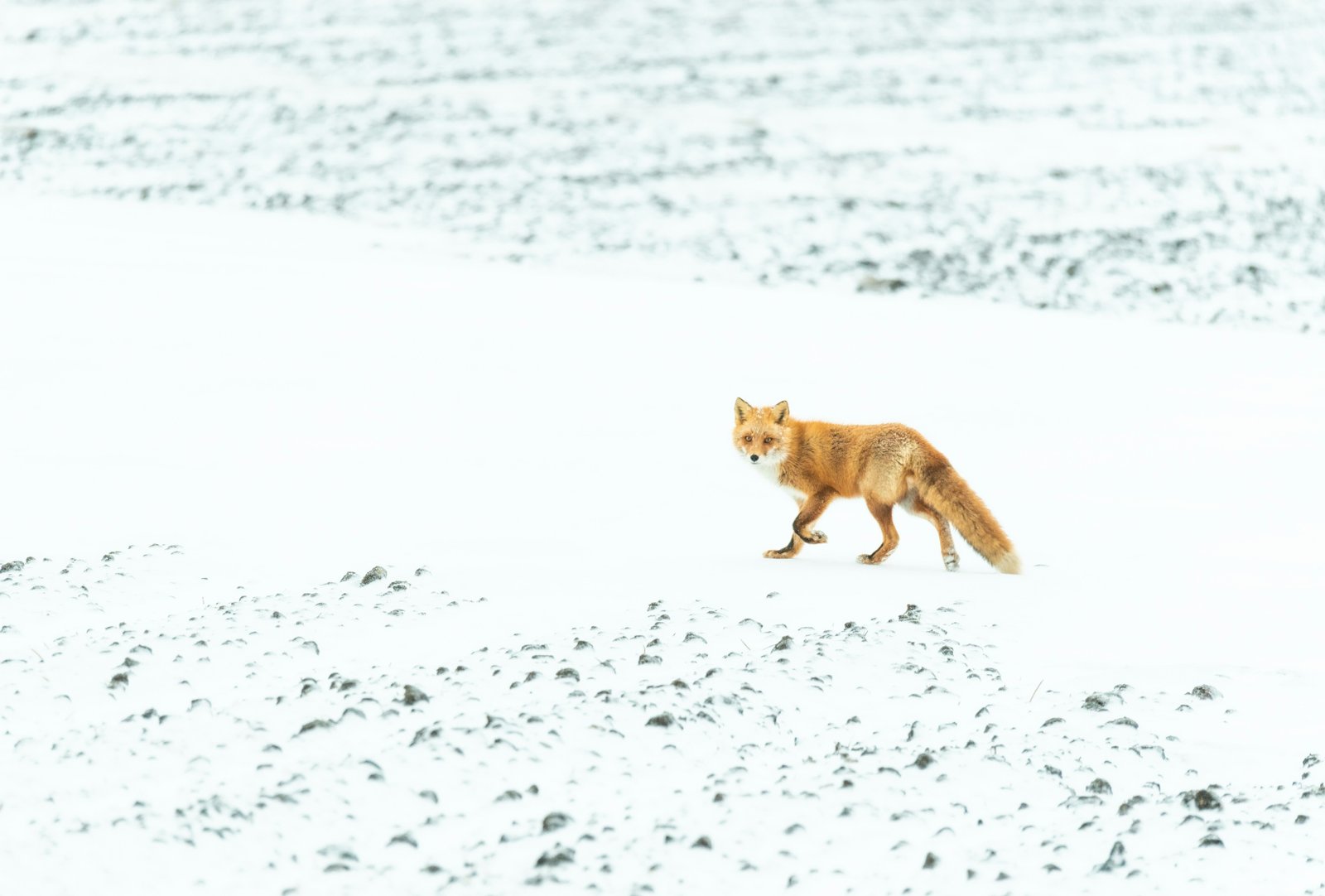
What the study found
The study found that red fox numbers in Arctic Norway changed sharply from year to year, mainly because of natural mortality and immigration. Current harvest levels were likely enough to stop the population from growing over longer periods, but even much larger harvest increases did not produce a population decline.
Why the authors say this matters
The authors conclude that integrated population models can help study population dynamics even when there are no structured surveys of live animals. They also suggest that their workflow can support cost-effective management analyses and help inform strategies aimed at reducing biodiversity loss.
What the researchers tested
The researchers developed an integrated population model, or IPM, which is a model that combines multiple data sources while accounting for bias and uncertainty. They applied it to red foxes in Arctic Norway using data from more than 4,000 harvested foxes, opportunistic field observations, and information published on red foxes elsewhere, then used retrospective and prospective analyses to examine population change over 20 years.
What worked and what didn't
The model was able to estimate population dynamics over two decades and identify drivers of change in population growth rates. It showed that fluctuations were linked to natural mortality and immigration responding to rodent prey availability and population density, and that density dependence, especially through immigration, buffered the population strongly. Substantial harvest increases still did not induce population decline.
What to keep in mind
The abstract does not describe detailed limitations of the approach. The findings are presented for an expanding red fox population in Arctic Norway, so the specific results are tied to that study population and management context.
Key points
- Red fox population size in Arctic Norway showed strong year-to-year fluctuations.
- Natural mortality and immigration were major drivers of those fluctuations.
- Current harvest levels were likely sufficient to prevent long-term population increase.
- Even substantial increases in harvest levels did not lead to population decline.
- The workflow combined harvested-animal data, opportunistic observations, and published information.
Disclosure
- Research title:
- Harvest levels may prevent red fox growth, but not decline
- Authors:
- Chloé R. Nater, Stijn P. Hofhuis, Matthew Grainger, Øystein Flagstad, Rolf A. Ims, Siw T. Killengreen, Dorothée Ehrich
- Institutions:
- Centre for Arctic Gas Hydrate, Environment and Climate, Centre for Arctic Gas Hydrate, Environment and Climate, Centre for Arctic Gas Hydrate, Environment and Climate, Norwegian Institute for Nature Research, Norwegian Institute for Nature Research, Norwegian Institute for Nature Research, UiT The Arctic University of Norway, UiT The Arctic University of Norway, UiT The Arctic University of Norway, UiT The Arctic University of Norway
- Publication date:
- 2026-04-01
- OpenAlex record:
- View
- Image credit:
- Photo by TERRA on Unsplash · Unsplash License
Get the weekly research newsletter
Stay current with peer-reviewed research without reading academic papers — one filtered digest, every Friday.