

What the study found
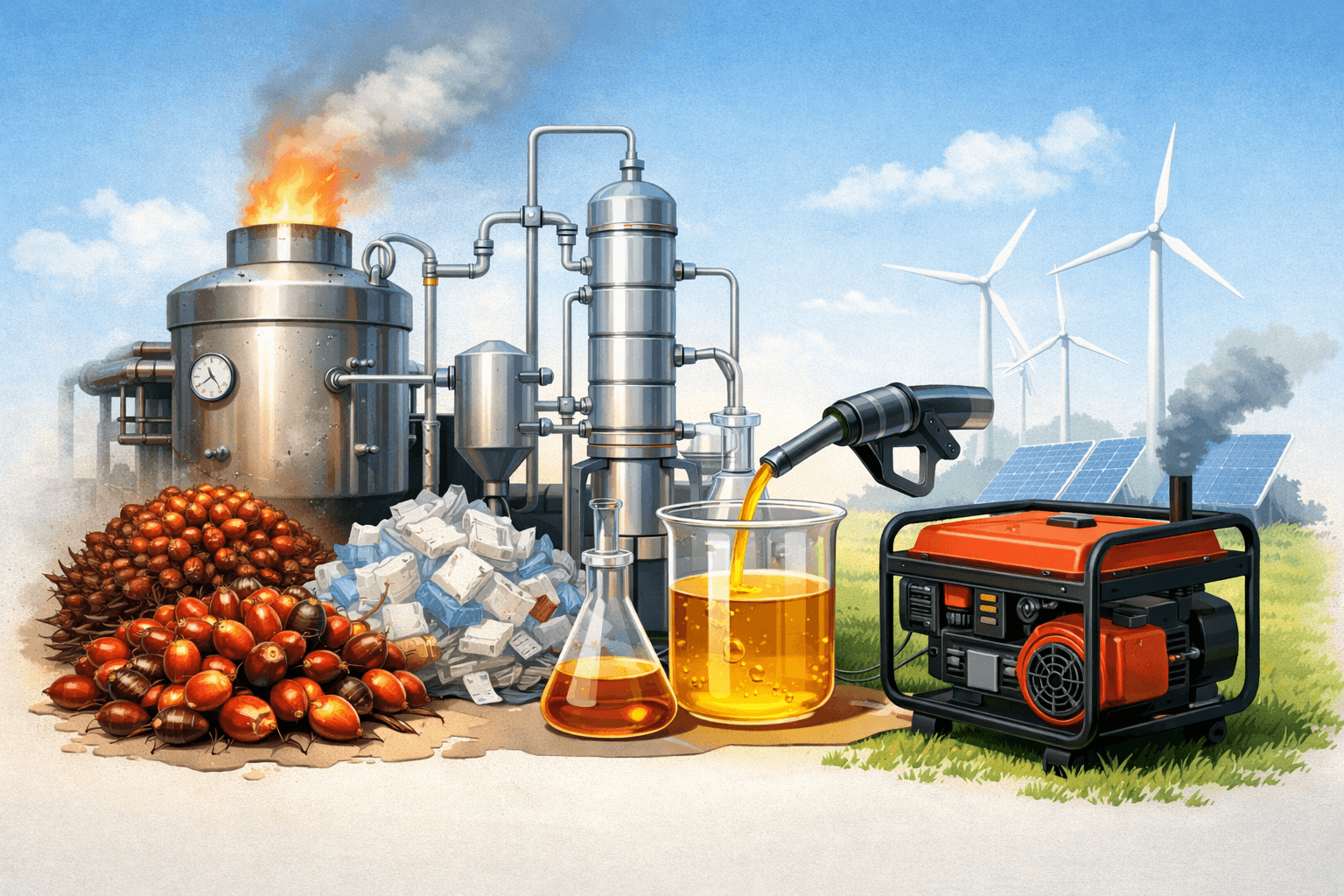
Co-pyrolysis of fresh palm fruit bunches and polypropylene waste produced a diesel-range fraction called pyro-diesel that could be used in a 2.5 kW agricultural generator without engine modification. Higher polypropylene content increased lighter products and improved the fuel quality of the diesel-range fraction, even though its yield decreased.
Why the authors say this matters
The authors say the study addresses a gap because earlier work on biomass–plastic co-pyrolysis focused mainly on crude bio-oil, with less attention to distillation into engine-grade fractions and testing in power-generation systems. The findings indicate that integrating co-pyrolysis, fuel upgrading, and small-scale generator use may be relevant for decentralized power generation.
What the researchers tested
The researchers co-pyrolyzed fresh palm fruit bunches and polypropylene waste at 450 °C using feed ratios of 100:0, 75:25, and 50:50. They then distilled the liquid product atmospherically to obtain a diesel-range fraction and tested that fraction in a 2.5 kW agricultural generator.
What worked and what didn't
As polypropylene content increased, pyro-gasoline yield rose from 20.1% to 71.9%, while pyro-diesel yield fell from 26.2% to 15.5%. At the same time, the diesel-range fraction showed higher lower heating value, lower kinematic viscosity, and fewer oxygenated compounds; in generator tests, operating time increased from 2.1 to 3.6 h, electrical energy output rose from 5.2 to 8.9 kWh, and electrical generation efficiency reached 23.6–25.3%, comparable to or slightly higher than B7 diesel and B100 biodiesel.
What to keep in mind
The abstract does not describe detailed experimental limitations beyond noting that prior work had limited attention to distillation and direct engine validation. The cost figures are described as indicative, and the results are limited to the feedstocks, ratios, and generator system tested here.
Key points
- Pyro-diesel from palm fruit bunches and polypropylene waste was tested in a 2.5 kW agricultural generator without engine modification.
- Increasing polypropylene content raised pyro-gasoline yield from 20.1% to 71.9% and lowered pyro-diesel yield from 26.2% to 15.5%.
- Fuel quality improved with more polypropylene, including higher lower heating value and lower kinematic viscosity.
- Generator operating time increased from 2.1 to 3.6 h, and electrical energy output increased from 5.2 to 8.9 kWh.
- Electrical generation efficiency reached 23.6–25.3%, comparable to or slightly higher than B7 diesel and B100 biodiesel.
- Indicative cost analysis reported lower pyro-diesel production and electricity generation costs at higher polypropylene ratios.
Disclosure
- Research title:
- Co-pyrolysis improved pyro-diesel quality and generator performance
- Publication date:
- 2026-04-04
- OpenAlex record:
- View
Get the weekly research newsletter
Stay current with peer-reviewed research without reading academic papers — one filtered digest, every Friday.