

Tracking the cost of flying: Empirical insights into airfare volatility and price variation in South Africa’s domestic market

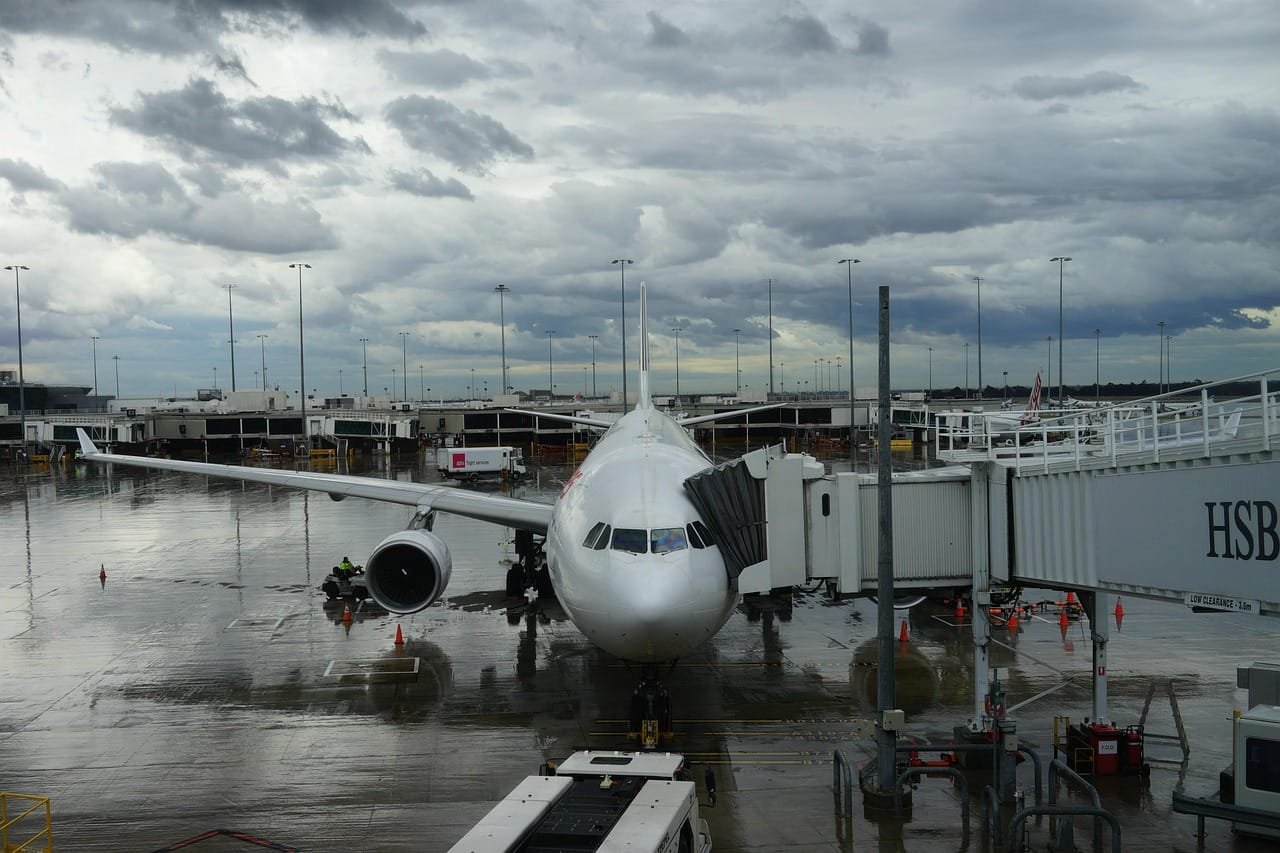
A commercial airliner parked at an airport gate with ground support equipment and airport infrastructure visible under an overcast sky.
Image Credit: Photo by SpencerWing on Pixabay (SourceLicense)

AI Summary of Peer-Reviewed Research

This page presents an AI-generated summary of a published research paper. The original authors did not write or review this article. See full disclosure ↓

⚠️ This summary is for informational purposes only and does not constitute financial or investment advice. Past research findings do not guarantee future outcomes. Consult a qualified financial professional before making investment decisions.

African Journal of Hospitality Tourism and Leisure·2026-03-31·Peer-reviewed·View original paper ↗·Follow this topic (RSS)
Publication Signals show what we were able to verify about where this research was published.MODERATECore publication signals for this source were verified. Publication Signals reflect the source’s verifiable credentials, not the quality of the research.
  • ✔ Peer-reviewed source
  • ✔ Published in indexed journal
  • ✔ No retraction or integrity flags

Key findings from this study

  • The study found that low-cost carriers consistently offered lower per-kilometre fares than full-service carriers operating equivalent routes.
  • The authors report that route distance and airline type jointly explained meaningful variation in airfare levels, while booking horizon exerted minimal influence.
  • The researchers demonstrate that full-service carriers exhibited substantially greater fare volatility than low-cost carriers across the observation period.

Overview

This study examined price competitiveness in South Africa's domestic airline market by analyzing 2,277 published fares across five carriers and three major routes. The research determined how airline type, route distance, and booking horizon influence airfare levels and volatility. The analysis encompassed both low-cost and full-service carriers operating on comparable domestic routes.

Methods and approach

The study applied a quantitative longitudinal design to published fare data. Descriptive statistics, ANOVA, correlation analysis, and multiple regression compared fare structures between low-cost and full-service carriers across different booking horizons. Unit costs were calculated as fares per kilometre to standardize pricing across variable route distances.

Results

Mean airfare across the sample equaled USD 86.92 with substantial variation. Low-cost carriers consistently charged lower fares per kilometre than full-service carriers. Shorter routes displayed markedly higher unit costs per kilometre than longer routes. Multiple regression analysis confirmed that distance and airline type jointly explained meaningful variation in airfares, accounting for a significant portion of price differences observed across the dataset. Booking horizon exerted minimal influence on fare levels.

Full-service carriers exhibited greater fare volatility than low-cost carriers, indicating differential pricing strategies between carrier types. The regression models demonstrated that structural and competitive factors—particularly route characteristics and carrier positioning—shaped domestic airfare behaviour more substantially than temporal booking dynamics. Published market data revealed systematic pricing patterns consistent with differentiated business models.

Implications

The findings suggest that domestic pricing strategies in South Africa reflect structural market positions rather than dynamic revenue management tied to booking timing. Policymakers examining competition and consumer protection in domestic aviation may consider that carrier type and route characteristics drive fare variation more significantly than advance-purchase requirements. The observed cost differential per kilometre on shorter routes may inform regulatory decisions regarding route profitability and service sustainability.

For pricing strategy, the study demonstrates that carriers employ fundamentally different approaches: low-cost operators maintain consistent, distance-based pricing while full-service carriers employ higher volatility strategies. Consumers evaluating airfare options should recognize that booking timing provides limited savings predictability; carrier selection and route characteristics present more reliable determinants of final cost. The results establish baseline competitive comparisons for longitudinal monitoring of domestic market dynamics.

Scope and limitations

This summary is based on the study abstract and available metadata. It does not include a full analysis of the complete paper, supplementary materials, or underlying datasets unless explicitly stated. Findings should be interpreted in the context of the original publication.

Disclosure

  • Research title: Tracking the cost of flying: Empirical insights into airfare volatility and price variation in South Africa’s domestic market
  • Authors: René Haarhoff
  • Institutions: University of the Western Cape
  • Publication date: 2026-03-31
  • DOI: https://doi.org/10.46222/ajhtl.19770720.720
  • OpenAlex record: View
  • Image credit: Photo by SpencerWing on Pixabay (SourceLicense)
  • Disclosure: This post was generated by Claude (Anthropic). The original authors did not write or review this post.

Get the weekly research newsletter

Stay current with peer-reviewed research without reading academic papers — one filtered digest, every Friday.

More posts