
Electric-carbon market coupling and price transmission mechanism in China: An empirical analysis and development barriers study

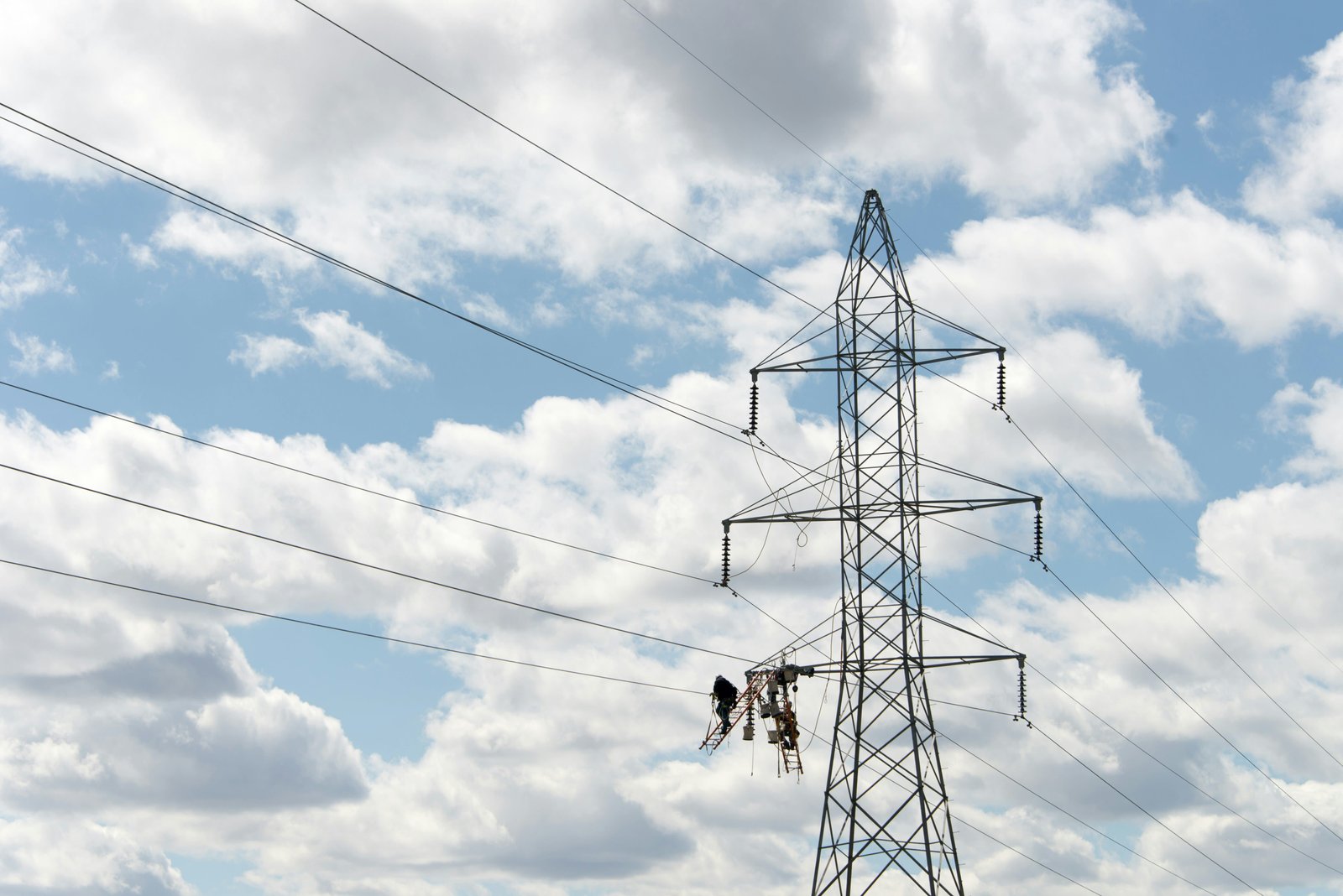
A tall electrical transmission tower with multiple cross-arms and power lines stretches vertically against a blue sky with white clouds, with workers visible on the structure and additional power lines extending horizontally from the tower.
Image Credit: Photo by American Public Power Association on Unsplash (SourceLicense)

AI Summary of Peer-Reviewed Research

This page presents an AI-generated summary of a published research paper. The original authors did not write or review this article. See full disclosure ↓

⚠️ This summary is for informational purposes only and does not constitute financial or investment advice. Past research findings do not guarantee future outcomes. Consult a qualified financial professional before making investment decisions.

Journal of Cleaner Production·2026-01-30·Peer-reviewed·View original paper ↗·Follow this topic (RSS)
Publication Signals show what we were able to verify about where this research was published.STRONGWe verified multiple publication signals for this source, including independently confirmed credentials. Publication Signals reflect the source’s verifiable credentials, not the quality of the research.
  • ✔ Peer-reviewed source
  • ✔ Published in indexed journal
  • ✔ No retraction or integrity flags

Key findings from this study

  • The study found that carbon price transmission efficiency to electricity tariffs reaches 0.765, indicating incomplete but substantial market coupling in China's dual-carbon policy framework.
  • The authors report that generators internalize carbon costs from the price's tidal effect rather than fully transmitting them, creating asymmetric burden distribution across market participants.
  • The researchers demonstrate that undeducted CCERs distort grid emission factors and create unaccounted carbon liabilities, representing a critical design flaw in the coupled market system.

Overview

This study examines the coupling mechanism between China's electricity and carbon markets under the dual-carbon policy framework. The research quantifies price transmission efficiency from carbon markets to generator-side electricity tariffs and identifies systemic barriers impeding market integration. Analysis spans provincial data from 2013 to 2023, incorporating both empirical measurement and institutional assessment.

Methods and approach

Provincial-level data from 2013 to 2023 support quantitative analysis of price transmission. Rolling regression techniques reveal dynamic pass-through effects across institutional transitions. The authors construct an ecosystem panorama mapping interactions among supply, circulation, and demand sides. A corporate case study of Huaneng International Group illustrates carbon cost internalization and energy transition outcomes.

Results

Empirical analysis quantifies carbon price transmission efficiency to generator-side electricity tariffs at 0.765. Rolling regression reveals this pass-through experienced temporary attenuation during major institutional transitions, indicating dynamic rather than static coupling. The Huaneng case demonstrates that carbon costs drive corporate energy transition, reducing carbon intensity by 37 percent and raising clean energy share to 31.24 percent. These outcomes validate the price signal mechanism's efficacy when internalized at the firm level.

Systemic barriers significantly constrain market coupling efficiency. Undeducted Chinese Certified Emission Reductions distort grid emission factors, creating unaccounted carbon liabilities for exporters. Generators internalize costs from the carbon price's tidal effect rather than fully transmitting them through tariffs. The incomplete transmission reflects imperfections in market design and misalignment between policy objectives and institutional mechanisms.

Implications

The identified transmission efficiency of 0.765 indicates substantial but incomplete price signal propagation. This gap represents underutilization of market mechanisms for steering clean energy investment and industrial decarbonization at scale. Generators' cost internalization demonstrates behavioral response to carbon pricing, yet incomplete pass-through suggests asymmetric distribution of decarbonization burdens across supply chain participants.

Addressing systemic barriers requires institutional reform targeting market infrastructure and compliance mechanisms. Establishing a unified environmental attributes registry would eliminate distortions from undeducted CCERs and clarify carbon liabilities across market participants. Reforming the compliance cycle to synchronize with tariff adjustment periods would enable transparent carbon cost reflection in prices. These structural changes would enhance policy effectiveness in achieving clean energy transition targets and ensure equitable cost distribution.

Scope and limitations

This summary is based on the study abstract and available metadata. It does not include a full analysis of the complete paper, supplementary materials, or underlying datasets unless explicitly stated. Findings should be interpreted in the context of the original publication.

Disclosure

  • Research title: Electric-carbon market coupling and price transmission mechanism in China: An empirical analysis and development barriers study
  • Authors: Jiajun Wu, Yanjun Shen, R. Yang, Hang Fan, Yunjie Duan
  • Institutions: North China Electric Power University
  • Publication date: 2026-01-30
  • DOI: https://doi.org/10.1016/j.jclepro.2026.147692
  • OpenAlex record: View
  • Image credit: Photo by American Public Power Association on Unsplash (SourceLicense)
  • Disclosure: This post was generated by Claude (Anthropic). The original authors did not write or review this post.

Get the weekly research newsletter

Stay current with peer-reviewed research without reading academic papers — one filtered digest, every Friday.

More posts