

AI Summary of Peer-Reviewed Research
This page presents an AI-generated summary of a published research paper. The original authors did not write or review this article. See full disclosure ↓
Publication Signals show what we were able to verify about where this research was published.STANDARDAvailable publication signals for this source were verified. Publication Signals reflect the source’s verifiable credentials, not the quality of the research.
Fewer signals were independently confirmable for this source. That reflects the limits of what’s on record — not a judgment about the research.
- ✔ No retraction or integrity flags
Key findings from this study
- The study found that parallel processing of conflict graph operations generates substantially larger cutting plane pools than serial approaches.
- The authors report that parallel conflict graph management produces substantial reductions in MIP solve time, with greater improvements on more challenging problem instances.
- The researchers demonstrate that conflict detection, clique generation, clique extension, and clique merging can be effectively parallelized within a unified graph management framework.
Overview
Conflict graphs represent logical relationships among binary variables in mixed-integer programming. The authors develop parallel algorithms for conflict graph management, including conflict detection, maximal clique generation, clique extension, and clique merging. These techniques enable solvers to generate substantially larger pools of cutting planes than serial approaches permit, leading to improved MIP solve times.
Methods and approach
The research leverages parallel computing infrastructure to intensify computational effort directed at conflict graph manipulation. The parallel framework handles four core operations: identifying conflicts among binary variables, generating maximal cliques from the conflict structure, extending cliques through algorithmic augmentation, and merging overlapping clique sets. This parallelization allows simultaneous processing of multiple graph operations, multiplying the cutting plane generation capacity beyond serial computational limits.
Results
Computational experiments demonstrate that parallel conflict graph management produces substantial reductions in total MIP solve time. The expanded cutting plane pool generated through parallelization proves especially effective for challenging problem instances. The magnitude of improvement correlates with problem difficulty, suggesting that parallel intensification becomes increasingly valuable as problem complexity increases.
Implications
Parallel conflict graph management addresses a critical bottleneck in branch-and-cut solver performance. Traditional serial implementations constrain cutting plane generation to computationally feasible limits within each solver iteration. By distributing conflict detection and clique operations across parallel processors, the approach overcomes this constraint without sacrificing solution quality or algorithmic correctness. The findings suggest that modern multi-core architectures remain substantially underutilized in current MIP solvers. Parallel conflict graph management represents a practical avenue for leveraging this computational capacity. The work establishes that intensified cut generation through parallelization directly improves solver efficiency, particularly for industrial-scale instances where solution time reductions carry significant practical value.
Scope and limitations
This summary is based on the study abstract and available metadata. It does not include a full analysis of the complete paper, supplementary materials, or underlying datasets unless explicitly stated. Findings should be interpreted in the context of the original publication.
Disclosure
- Research title: Parallelized Conflict Graph Cut Generation
- Authors: Yongzheng Dai, Chen Chen
- Institutions: The Ohio State University
- Publication date: 2026-03-10
- DOI: https://doi.org/10.1007/s12532-026-00307-4
- OpenAlex record: View
- PDF: Download
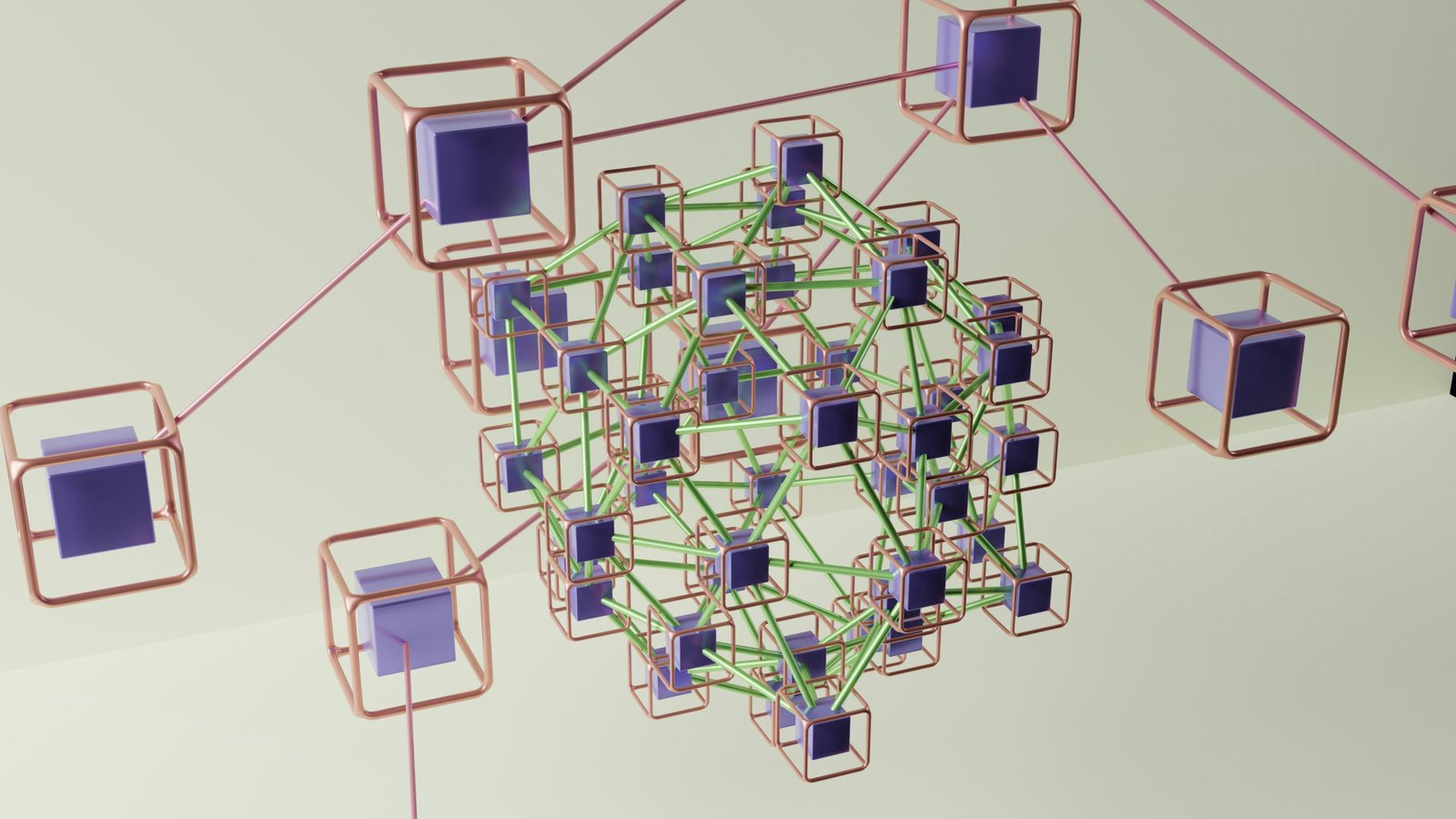
- Image credit: Photo by GuerrillaBuzz on Unsplash (Source • License)
- Disclosure: This post was generated by Claude (Anthropic). The original authors did not write or review this post.
Get the weekly research newsletter
Stay current with peer-reviewed research without reading academic papers — one filtered digest, every Friday.


