

What the study found
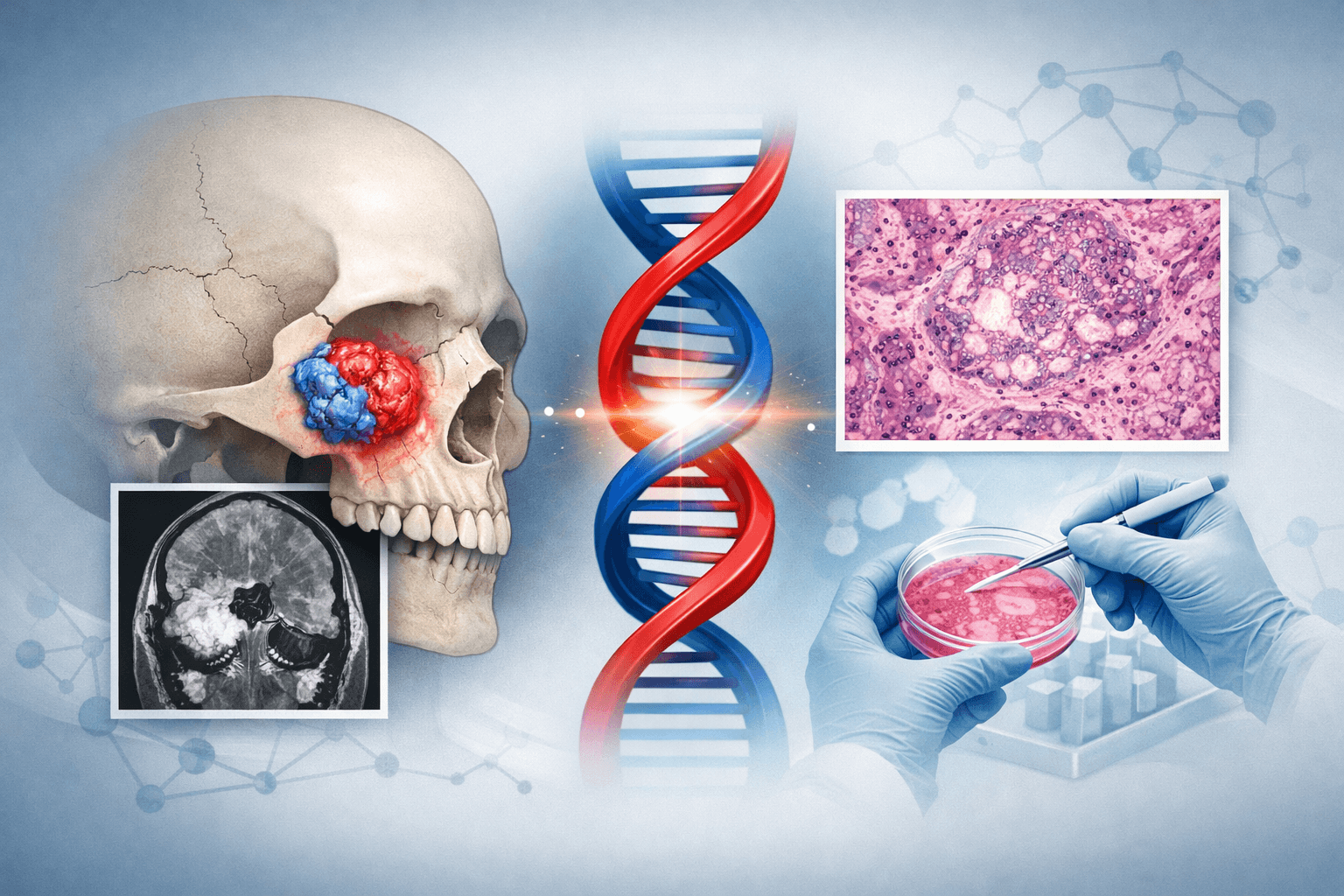
Molecular diagnostics, particularly RNA sequencing, played a key role in diagnosing mesenchymal chondrosarcoma and separating it from other high-grade pediatric sarcomas with similar appearance. The report also describes a pediatric maxillary mesenchymal chondrosarcoma with a confirmed HEY1::NCOA2 fusion and sirolimus-based maintenance therapy.
Why the authors say this matters
The authors conclude that identifying the HEY1::NCOA2 fusion confirms the diagnosis and may support biologically targeted therapeutic strategies. They also state that multimodal treatment can achieve meaningful disease control in aggressive craniofacial mesenchymal chondrosarcoma.
What the researchers tested
The article is a case report and literature review focused on a 13-year-old girl with maxillary mesenchymal chondrosarcoma. The researchers used RNA sequencing to identify the HEY1::NCOA2 fusion and reviewed prior reported cases.
What worked and what didn't
The abstract says that RNA sequencing helped establish the diagnosis and differentiate the tumor from other pediatric sarcomas with overlapping morphology. It also states that multimodal treatment including chemotherapy, radiotherapy, surgery, and targeted maintenance therapy was associated with meaningful disease control in this case.
What to keep in mind
This is a single rare case report, so the abstract does not provide broad estimates or comparative effectiveness data. The available summary does not describe detailed limitations beyond the rarity of the case and the small number of similar reported pediatric maxillary cases.
Key points
- RNA sequencing was central to diagnosing mesenchymal chondrosarcoma in this case.
- The tumor had a confirmed HEY1::NCOA2 fusion.
- The report concerns a 13-year-old girl with maxillary mesenchymal chondrosarcoma.
- The authors say multimodal treatment included chemotherapy, radiotherapy, surgery, and sirolimus-based maintenance therapy.
- The abstract describes the case as one of very few reported pediatric maxillary mesenchymal chondrosarcomas with confirmed HEY1::NCOA2 fusion.
Disclosure
- Research title:
- Pediatric maxillary mesenchymal chondrosarcoma with HEY1::NCOA2 fusion
- Publication date:
- 2026-03-05
- OpenAlex record:
- View
Get the weekly research newsletter
Stay current with peer-reviewed research without reading academic papers — one filtered digest, every Friday.