
Assemblages of terror and the policing of settlement boundaries: Devolution and the production of order in northern Kenya

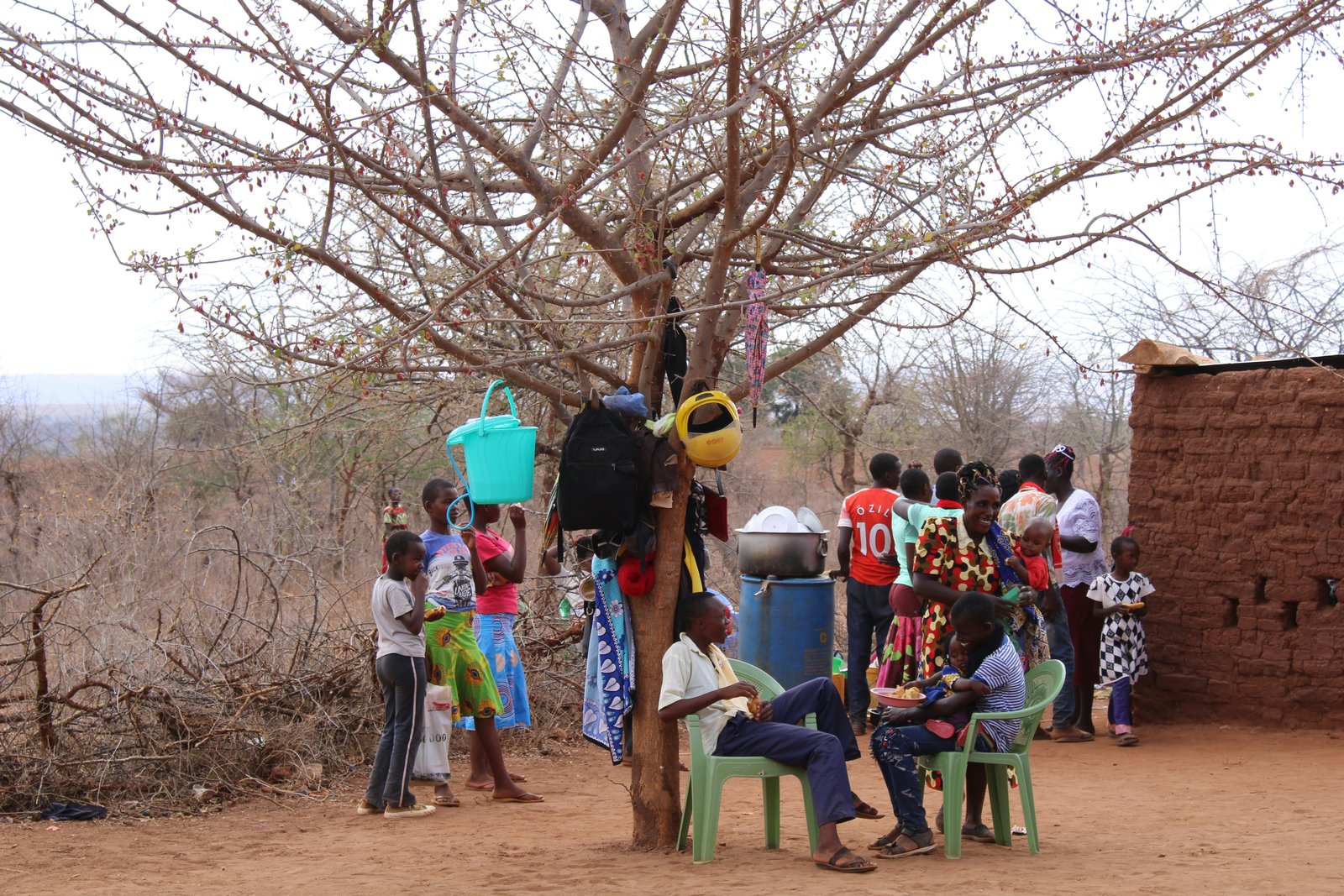
A group of people of varying ages gathered in a circle beneath a bare, leafless tree on arid red earth, with sparse dry vegetation and a brick structure visible in the background under an overcast sky.
Image Credit: Photo by Oscar Omondi on Unsplash (SourceLicense)

AI Summary of Peer-Reviewed Research

This page presents an AI-generated summary of a published research paper. The original authors did not write or review this article. See full disclosure ↓

Journal of Rural Studies·2026-03-04·Peer-reviewed·View original paper ↗·Follow this topic (RSS)
Publication Signals show what we were able to verify about where this research was published.STRONGWe verified multiple publication signals for this source, including independently confirmed credentials. Publication Signals reflect the source’s verifiable credentials, not the quality of the research.
  • ✔ Peer-reviewed source
  • ✔ Published in indexed journal
  • ✔ No retraction or integrity flags

Overview

This study examines how Kenya's 2010 constitutional devolution framework has restructured governance in pastoral rangelands of northern Kenya, producing unintended consequences that have transformed historical patterns of pastoral conflict into mechanisms of ethno-territorial control. Drawing on assemblage theory, the research traces how administrative decentralization to county units has functioned as a territorializing apparatus, reassembling diverse governance actors—county elites, security forces, and armed groups—into configurations that enforce ethnic boundaries through violence. The research focuses on contested borderlands spanning Samburu, Baringo, Turkana, and West Pokot counties, where fluid pastoral commons have been reorganized into rigid territorial formations.

Methods and approach

The study employs qualitative research methods conducted over 24 months between 2022 and 2024 in the borderlands of Amaya and Lorogon, located at the intersections of four county jurisdictions. The methodological approach centers on assemblage theory as an analytical framework for understanding how devolution has reconfigured governance structures and conflict dynamics. The research engages with empirical evidence from contested rangelands to trace the genealogy of pastoral conflict transformation and to document boundary-making processes that have militarized pastoral commons. This approach treats violence and territorial control not as inevitable outcomes but as effects of specific assemblages of state institutions, security actors, and armed groups.

Key Findings

The analysis reveals a fundamental transformation in the logic of pastoral conflict from reciprocal raiding systems with economic rationales (livestock acquisition) into coordinated violence strategies oriented toward territorial displacement and ethno-political dominance. Across the study sites, violence has intensified and taken new forms—characterized by sieges, systematic maiming, and targeted killings designed to depopulate rival communities rather than acquire resources. County administrative boundaries, initially conceived as tools for decentralized governance and equitable resource distribution, have become instruments for institutionalizing ethnic exclusion and territorial control. The research documents how county-level elites, security personnel, and organized armed groups have assembled into governance configurations that enforce boundary discipline through violence, rendering pastoral spaces into what the analysis characterizes as war machines.

Implications

The findings demonstrate that devolution, as implemented in pastoral Kenya, has produced governance structures that operate through ethno-territorial violence rather than democratic participation or equitable development. The institutionalization of county units as ethnic-administrative containers has incentivized boundary enforcement and community displacement, effectively converting historical raiding economies into mechanisms for political territorialization and dispossession. This dynamic indicates that constitutional frameworks intended to promote inclusion and equity can generate the opposite effect when implemented within contexts of historical marginalization and asymmetric resource control.

The study suggests that understanding contemporary pastoral conflicts requires analysis of how state administrative reforms assemble with existing security architectures and local political economies to produce novel forms of violence and territorial control. The violence assemblages documented in Amaya and Lorogon operate across multiple registers—administrative, military, and communal—making them resistant to conventional security responses that target individual actors or incidents. The research implies that addressing ethno-territorial violence in pastoral rangelands requires interventions that fundamentally reconfigure county governance structures and the incentive systems that reward boundary enforcement.

Broader implications concern the relationship between administrative decentralization and ethnic territorialization in postcolonial African contexts. The analysis indicates that devolution frameworks must account for how county-level institutional architectures interact with existing inequalities and security landscapes to either mitigate or intensify identity-based conflict. The case of northern Kenya demonstrates how well-intentioned governance reforms can become mechanisms for consolidating ethnic control and legitimizing violence when implemented without mechanisms to constrain exclusionary boundary-making or address underlying structural inequalities.

Scope and limitations

This summary is based on the study abstract and available metadata. It does not include a full analysis of the complete paper, supplementary materials, or underlying datasets unless explicitly stated. Findings should be interpreted in the context of the original publication.

Disclosure

  • Research title: Assemblages of terror and the policing of settlement boundaries: Devolution and the production of order in northern Kenya
  • Authors: Evelyne Atieno Owino
  • Institutions: BICC – Bonn International Centre for Conflict Studies
  • Publication date: 2026-03-04
  • DOI: https://doi.org/10.1016/j.jrurstud.2026.104084
  • OpenAlex record: View
  • Image credit: Photo by Oscar Omondi on Unsplash (SourceLicense)
  • Disclosure: This post was generated by Claude (Anthropic). The original authors did not write or review this post.

Get the weekly research newsletter

Stay current with peer-reviewed research without reading academic papers — one filtered digest, every Friday.

More posts