

AI Summary of Peer-Reviewed Research
This page presents an AI-generated summary of a published research paper. The original authors did not write or review this article. See full disclosure ↓
Publication Signals show what we were able to verify about where this research was published.MODERATECore publication signals for this source were verified. Publication Signals reflect the source’s verifiable credentials, not the quality of the research.
- ✔ Peer-reviewed source
- ✔ No retraction or integrity flags
Overview
This study examines Yorùbá traditional music as a narrative and cultural instrument within African theatre, utilizing a case study of Yorùbá songs composed for the FÀDÁKÀ production of Femi Osofisan's Red is the Freedom Road. The research addresses a significant gap in African theatre documentation by analyzing how musical elements function beyond decorative purposes, serving instead as integral narrative structures. The investigation emphasizes the absence of systematic musical documentation in African play texts and proposes methodological frameworks for preserving musical compositions, including tone marks, transcriptions, and musical scores.
Methods and approach
The study employs a combined analytical and documentary approach, examining the creation and lyrical composition of Yorùbá songs commissioned for a specific theatrical production. The methodology integrates musicological analysis with dramaturgical critique, assessing the narrative function, emotional resonance, and cultural signification of musical elements within the theatrical context. The research incorporates direct engagement with the staged production at Wole Soyinka Theatre and examines existing play texts to identify documentation deficiencies. The approach includes comparative evaluation of how established playwrights address musical integration and proposes standardized preservation protocols for future theatrical documentation.
Key Findings
The research demonstrates that Yorùbá traditional music functions as a substantive narrative force rather than supplementary accompaniment within the theatrical work. The songs crafted for the production effectively deepen storytelling capacity, activate cultural identity recognition, and generate measurable emotional engagement. The study identifies systemic documentation failures across African play texts, revealing that even canonized playwrights frequently omit musical specifications. The analysis establishes concrete deficiencies in the absence of tonal notation, melodic transcription, and harmonic documentation within published dramatic texts, thereby compromising the fidelity of subsequent interpretations and limiting archival preservation.
Implications
The findings establish that musical elements in African drama warrant equivalent theoretical and documentary rigor as textual elements. The study argues for institutional and editorial frameworks that mandate the inclusion of musical scores, phonetic transcriptions with tonal marking systems, and interpretive guidance within published play texts. This standardization would facilitate both contemporary performance accuracy and long-term cultural archival preservation. The research demonstrates that music constitutes a primary narrative mechanism rather than an auxiliary feature, necessitating reorientation of how African dramatic texts are conceptualized, documented, and transmitted across pedagogical and performance contexts.
The research contributes substantive methodology for integrating musical documentation into African theatre scholarship and production. By establishing protocols for capturing musical specificity within dramatic texts, the study provides frameworks applicable to broader African performance traditions. The work underscores the necessity for interdisciplinary collaboration between musicologists, dramatists, and scholars of African expressive cultures. Furthermore, the study argues for recognition that musical literacy and performance constitute essential dimensions of dramatic authorship in African contexts, positioning music documentation as an ethical and scholarly imperative within theatre studies and cultural preservation.
Scope and limitations
This summary is based on the study abstract and available metadata. It does not include a full analysis of the complete paper, supplementary materials, or underlying datasets unless explicitly stated. Findings should be interpreted in the context of the original publication.
Disclosure
- Research title: Yorùbá Traditional Music as a Narrative Tool: Crafting Yorùbá Songs for Femi Osofisan’s “Red is the Freedom Road”
- Authors: Victoria Ọbásòótọ́
- Publication date: 2026-03-10
- DOI: https://doi.org/10.52589/ajchrt-mptvfh3h
- OpenAlex record: View
- PDF: Download
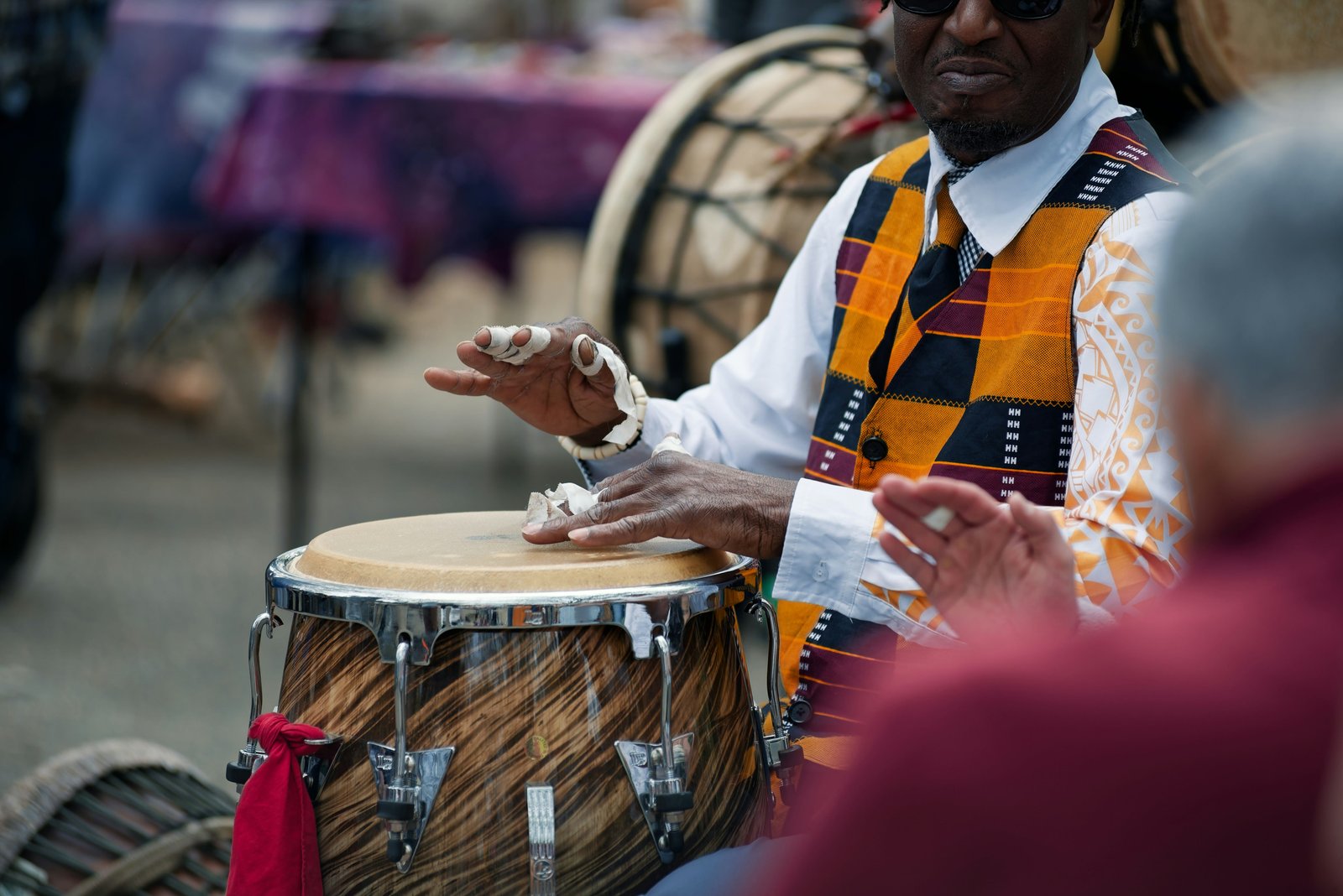
- Image credit: Photo by Michael Umoh on Unsplash (Source • License)
- Disclosure: This post was generated by Claude (Anthropic). The original authors did not write or review this post.
Get the weekly research newsletter
Stay current with peer-reviewed research without reading academic papers — one filtered digest, every Friday.


