

What the study found
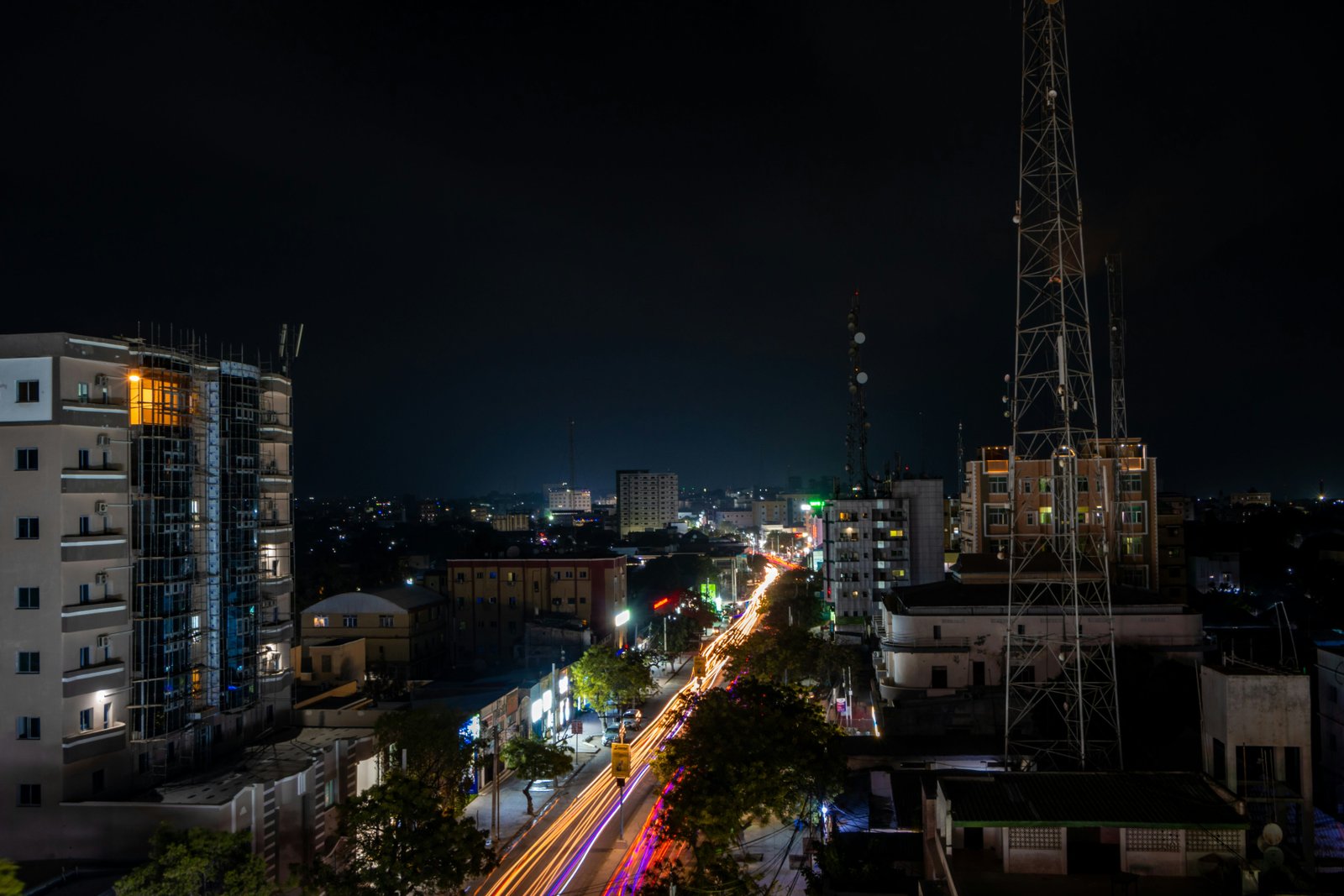
The study finds that telecommunications companies, especially Hormuud Telecommunications Company and affiliated firms, play a central role in urban speculation in Mogadishu. The authors describe these firms as helping shape both the imagined future of the city and the material processes that build it.
Why the authors say this matters
The authors conclude that telecoms are doing performative work in both market-making and world-making, and that they are drawing diaspora capital into urban projects in ways that differ from other economic sectors. They also suggest that telecoms across Africa deserve more empirical and conceptual attention because of their growing wealth and scope.
What the researchers tested
The paper examines urban land development in Mogadishu during a period of state rebuilding after the collapse of the Somali state in the 1990s. It focuses on Hormuud Telecommunications Company and affiliated companies involved in financing, construction, technical training, electricity provision, and transnational money transfer, with particular attention to Darul Salaam, a new city on Mogadishu’s periphery.
What worked and what didn't
The authors show that telecoms are not only promoting future visions of the city but also taking practical steps to help produce them. They identify Darul Salaam as a clear example of this process, especially for diaspora and local elites. The abstract does not report any failed interventions or negative outcomes in detail.
What to keep in mind
The abstract focuses on Mogadishu and its specific political and economic context, so the findings are presented as context-specific. It does not provide detailed limitations beyond noting that the broader role of telecoms across Africa still needs more study.
Key points
- Telecommunications companies are described as central actors in urban speculation in Mogadishu.
- Hormuud and affiliated firms are involved in financing, construction, training, electricity provision, and money transfer.
- Darul Salaam is highlighted as a new city developed for diaspora and local elites.
- The authors say telecoms are engaged in both market-making and world-making.
- The abstract calls for more attention to telecoms’ role in urban processes across Africa.
Disclosure
- Research title:
- Telecom companies are central to urban speculation in Mogadishu
- Authors:
- Liza Rose Cirolia, Abdifatah Ismael Tahir, Tom Goodfellow, Abdullahi Ali Hassan
- Institutions:
- Box Hill Institute, Mogadishu University, University of Cape Town, University of Manchester, University of Oxford, University of Somalia
- Publication date:
- 2026-02-27
- OpenAlex record:
- View
- Image credit:
- Photo by Abdalla Emiir on Unsplash · Unsplash License
Get the weekly research newsletter
Stay current with peer-reviewed research without reading academic papers — one filtered digest, every Friday.