

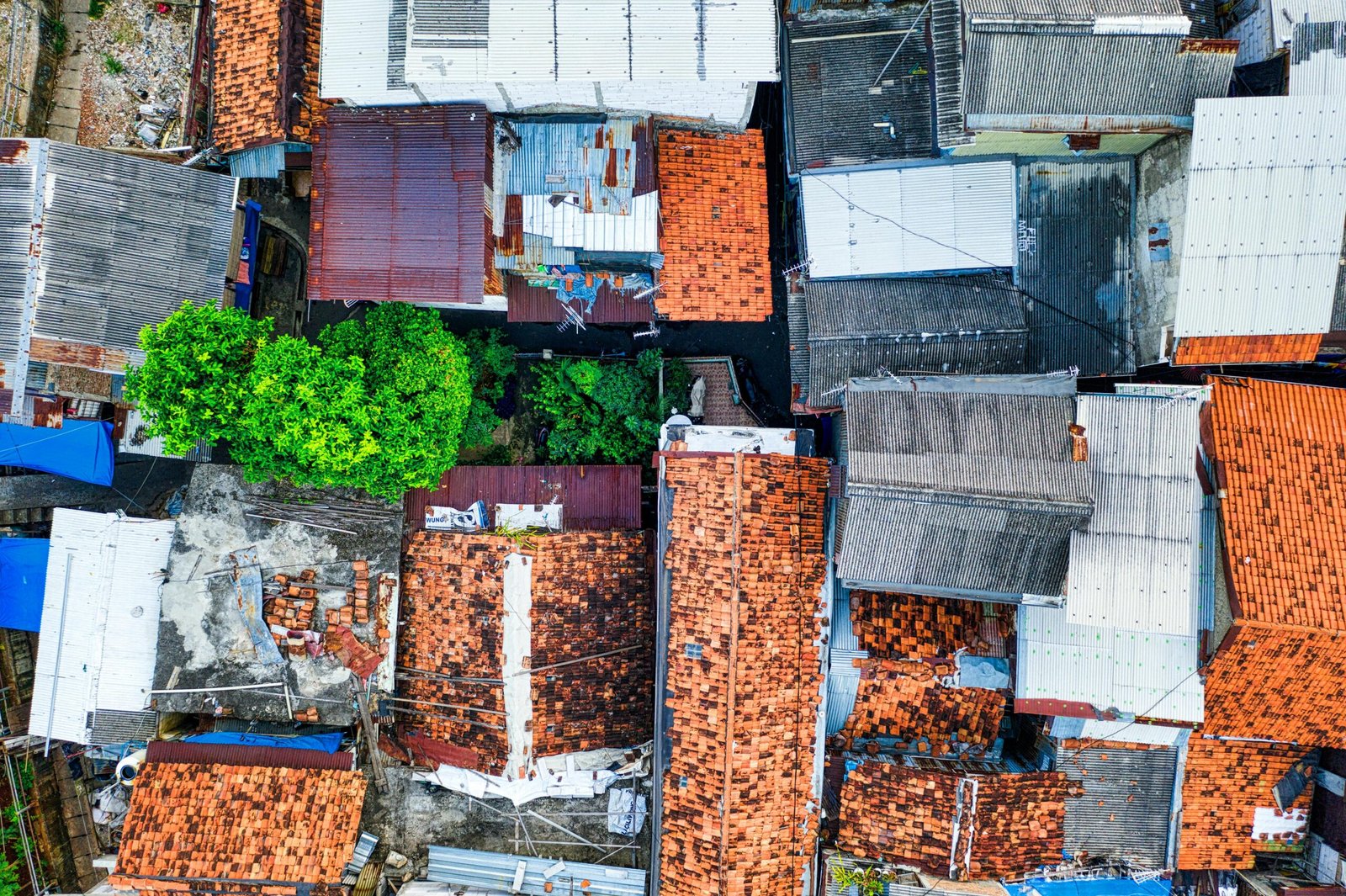
This study examines how competing projects that frame the past and built environment affect housing in Jakarta’s urban villages, especially amid increased evictions between 2013 and 2018. The research compares top-down redevelopment in the Old Town with grassroots efforts in two kampungs and finds different political effects on displacement. Top-down projects focused on infrastructure and private investment were more likely to drive gentrification by turning space into commodities. Local residents and advocates used bottom-up place-making to resist displacement, producing mixed and sometimes unexpected outcomes for housing security and urban politics.
What the study examined
This research explored how different projects that claim the past and the built environment shape housing and displacement in Jakarta’s urban villages. The focus was on interactions between state and private redevelopment in the Old Town and grassroots place-making in two kampungs, Luar Batang and Pekojan.
Through ethnographic work and thematic analysis, the study looked at who defines value in the city, how those definitions change neighborhoods, and how local people respond politically to threats of eviction and change.
Key findings
The research showed a clear contrast between top-down redevelopment and community-led efforts. Projects led from above emphasized physical upgrades and strong private-sector roles, which tended to turn local space into marketable assets and increased the risk of gentrification.
Community-led approaches aimed to reclaim place and rights in the city. These grassroots strategies were used to resist displacement, but they produced mixed effects for housing security and sometimes led to unexpected political outcomes.
- Top-down projects prioritized infrastructure and material values, shaping urban change in ways that favored capital accumulation.
- Grassroots responses used local meanings and claims to protect residency, creating new political alliances and contests with official authorities.
- The interaction of both approaches revealed tensions and disjunctures between different kinds of authority, reshaping how urban politics play out on the ground.
Why it matters
These findings illuminate how different ways of valuing city spaces influence who benefits from redevelopment and who faces displacement. The study contributes to understanding the politics of gentrification in heritage and urban studies by showing how both top-down and bottom-up projects reshape housing security and urban governance.
By tracing the varied impacts in Jakarta’s Old Town and two kampungs, the research highlights the complex political work involved when residents, private actors, and state agencies contest what the city should be and for whom.
Disclosure
- Research title: Contested urbanisms: The politics of heritage and housing in Jakarta’s kampungs
- Authors: Binte Masron, Irna Nurlina
- Journal / venue: Birkbeck Research Data (2027-01-01)
- DOI: 10.18743/pub.00056687
- OpenAlex record: View on OpenAlex
- Links: Landing page
- Image credit: Image source: PEXELS (Source • License)
- Disclosure: This post was generated by Artificial Intelligence. The original authors did not write or review this post.