

About This Article
This is an AI-generated summary of a research paper. The original authors did not write or review this article. See full disclosure ↓
Overview
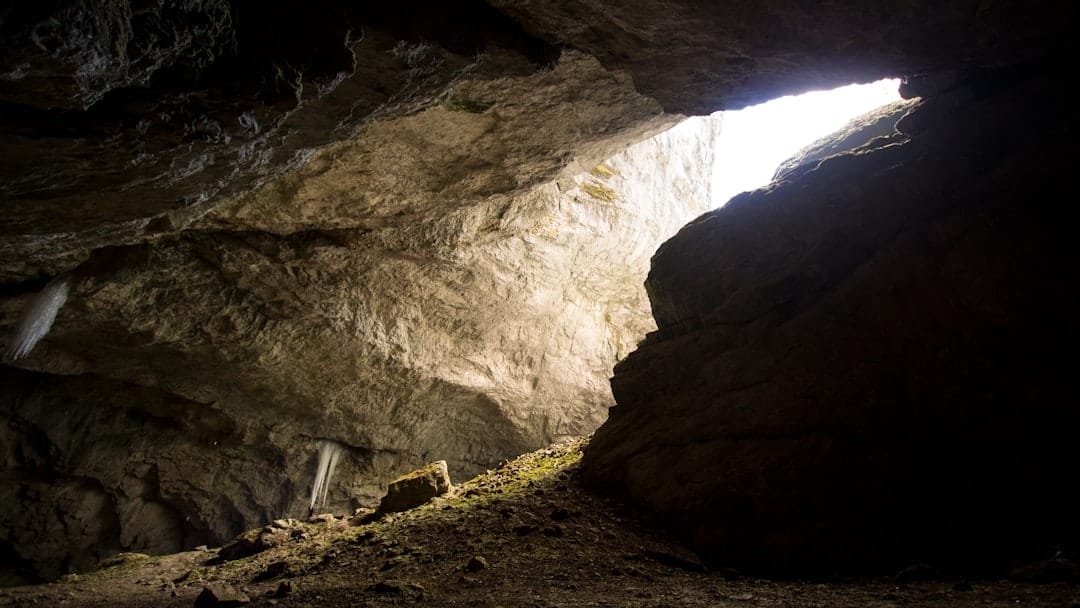
This research reports on recently discovered human remains and associated artifacts from Heaning Wood Bone Cave in Cumbria, UK, establishing it as an important multi-period burial site spanning the Early Mesolithic through Early Bronze Age. Radiocarbon dating identified the earliest known human remains from northern Britain, termed the 'Ossick Lass,' dating between 9290 and 8925 cal BC. The cave served as a burial location during three distinct prehistoric phases, with one individual from the Early Mesolithic, four from the Early Neolithic, and two from the Early Bronze Age. This site contributes significantly to understanding funerary practices and the deposition of human remains in caves across northwest Europe during these periods. Cave archaeology has increasingly been recognized for its contributions to understanding Holocene prehistory in Europe, particularly regarding funerary practices from the Mesolithic, Neolithic, and Early Bronze Age.
Methods and approach
The research employed a comprehensive multidisciplinary approach integrating radiocarbon dating, palaeogenomic analysis, osteological examination, and taphonomic analysis. A systematic radiocarbon dating programme established chronological phases for the human remains and associated artifacts. Genomic analysis was conducted on sampled individuals to determine biological sex and potentially other genetic information. Osteological methods were applied to analyze skeletal remains, while taphonomic analysis examined preservation conditions and depositional processes. The investigation also included analysis of material culture, specifically worked stone assemblages and ceramic sherds, to contextualize the burial phases. Isotopic evidence was evaluated as part of the dating and analytical framework. These combined methodologies allowed reconstruction of burial practices across the three prehistoric phases identified at the site.
Results
Radiocarbon dating established that the human remains include the earliest discovered in northern Britain, with the Early Mesolithic individual dating between 9290 and 8925 cal BC. The cave contained remains from seven individuals distributed across three temporal phases: one Early Mesolithic, four Early Neolithic, and two Early Bronze Age individuals. Palaeogenomic analysis revealed that all sampled individuals except one were biologically female. Taphonomic and osteological evidence indicated that burial practice in each phase involved successive inhumation of recently deceased bodies into the vertical entrance of the cave. Associated artifacts included perforated periwinkle shell beads radiocarbon dated to the Early Mesolithic, a worked stone assemblage containing diagnostically Early Neolithic pieces, and sherds of Early Bronze Age Collared Urn pottery. These findings demonstrate recurrent use of the cave for burial across approximately 7000 years of prehistory.
Implications
The findings establish Heaning Wood Bone Cave as a significant addition to knowledge concerning prehistoric funerary practices and cave use in northwest Europe. The site demonstrates continuity in cave burial practices across multiple prehistoric periods, with successive inhumations occurring over millennia at the same location. The predominance of biologically female individuals among the sampled remains raises questions about gender-specific burial practices or site selection criteria during these periods. The presence of the earliest northern British human remains, alongside the multi-period use pattern, positions this site as crucial comparative material for understanding regional and broader European patterns of cave burial. The association of specific artifact types with each temporal phase provides chronological markers and cultural context for Early Mesolithic, Early Neolithic, and Early Bronze Age communities in northern Britain. These data contribute to developing frameworks for interpreting the role of caves in prehistoric mortuary behavior and landscape use.
Disclosure
- Research title: Farthest North: Human Remains from Heaning Wood Bone Cave, Cumbria, UK and their European context
- Authors: Keziah Warburton, Rick Peterson, Chris Barrington, Thomas Booth, Christopher Jazwa, Monica Kelly, Jesse McCabe, Marina Silva, Pontus Skoglund, Martin Stables, Frankie Tait, Mia Williams
- Publication date: 2026-01-23
- DOI: https://doi.org/10.1017/ppr.2025.10077
- OpenAlex record: View
- Image credit: Photo by İamucex on Pexels (Source • License)
- Disclosure: This post was generated by artificial intelligence. The original authors did not write or review this post.


